Questions to Ask Before Your First Sleep Specialist Consultation

Walking into your first sleep specialist appointment can feel like showing up to a test you never studied for. You know you are not sleeping well. Your primary care doctor may be concerned enough to send you for testing. But what happens in that first visit, and what you should be asking, is often a mystery. A short list of questions to ask before your first sleep specialist consultation can turn a rushed, confusing appointment into one where you leave knowing what comes next.
At Vector Sleep Diagnostic Center in Rego Park, Queens, which has run sleep testing since 2005 and performs 900 to 1000 sleep studies a year, patients come in from all over New York City, often after months of poor sleep, unexplained fatigue, or a referral they do not fully understand yet. This guide walks through the questions worth asking before, during, and after that first consultation.
Why the First Sleep Specialist Consultation Matters
The first visit with a sleep specialist sets the direction for everything that follows. It is where your symptoms get connected to a possible diagnosis, where testing gets ordered, and where you learn whether what you are experiencing is a passing rough patch or something that needs medical attention. If you are not sure why a doctor sent you, read why your primary care doctor referred you to a sleep specialist before you walk in.
This visit is also your chance to describe your symptoms in your own words, not just the shorthand in a referral note. Specialists rely on the details you provide: when the fatigue hits hardest, whether your partner has mentioned snoring or gasping, how your sleep has changed over time.
Questions About Your Symptoms
Many patients arrive unsure whether what they feel is normal tiredness or something that needs testing. Bring these questions:
- Do my symptoms sound consistent with a specific sleep disorder, or could there be several explanations?
- Is my level of daytime sleepiness something to be concerned about?
- Could any of my symptoms come from a separate medical condition?
- Are there patterns in my sleep or waking that stand out to you?
A useful starting point is knowing how much sleep you should be getting. NHLBI publishes recommended ranges by age, based on American Academy of Sleep Medicine guidance endorsed by the American Academy of Pediatrics:
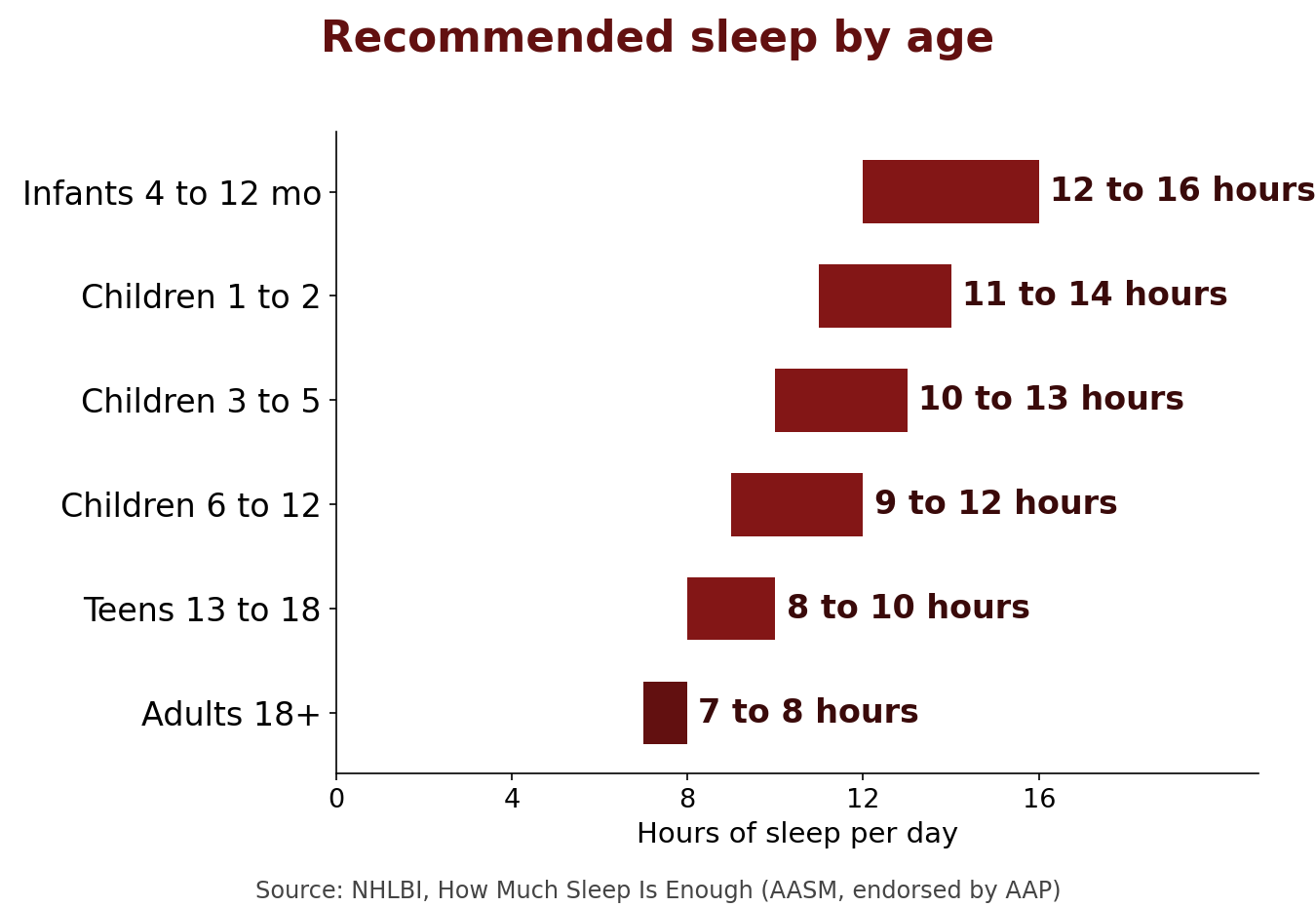
If you spend enough time in bed and still feel exhausted, read when daytime fatigue means it is time to see a sleep specialist.
Have your questions ready? Call Vector Sleep Diagnostic Center and our Rego Park team will help you schedule your visit.
Questions About Sleep Testing
NHLBI notes that “to diagnose sleep apnea, your provider may have you do a sleep study.” If your specialist recommends one, you should leave the consultation understanding what it involves:
- What type of sleep test are you recommending, and why is it the right one for my symptoms?
- Where will the test take place, and what does the night look like?
- What should I do differently the night before, with food, caffeine, medication, or routine?
- How soon can testing be scheduled?
Vector’s main service is the in-lab sleep study at its Rego Park location. Before your test, review how to prepare the night before a sleep study so instructions about medications, caffeine, or your evening routine do not catch you off guard.
Questions About Getting Your Results Explained
A sleep study produces a lot of data, and a printout on its own does not mean much to most patients. Ask directly:
- Will someone walk me through my results, or will I only receive a report?
- What do these results mean for my day to day health?
- What are the next steps if the test shows a diagnosis like sleep apnea?
- What happens if the results are unclear?
If you are still deciding whether testing is the right move, start with sleep diagnostics as the first step to sleep health.
Questions About Insurance and Scheduling
Cost and logistics questions are fair to ask up front. Vector accepts all major insurance plans, including Medicare and Medicaid. Ask about:
- Does my plan need a referral or prior authorization for the consultation or the sleep study?
- Who do I call to schedule or reschedule, and how much notice is needed?
- Will I get written instructions before the study night?
Questions to Ask Yourself Before the Appointment
Some of the most useful preparation happens before you arrive. Work through these on your own:
- How long have I had sleep problems, and have they gotten worse recently?
- Has anyone told me I snore loudly, gasp, or stop breathing during sleep?
- Am I relying on home remedies or supplements that have not worked?
- Have I noticed changes in mood, concentration, or memory that line up with poor sleep?
If you have tried to fix things on your own for a while, read signs your sleep issues need medical attention, not home remedies.
Questions About Lifestyle Factors
A good consultation also covers everyday habits that may feed your symptoms. It is fair to ask:
- Could my screen use or evening habits be contributing to my sleep problems?
- Are there changes you recommend before or alongside testing?
- How much of this is likely lifestyle related versus a medical condition that needs treatment?
This matters for anyone living the fast schedule common across New York City. Read whether technology use before bedtime worsens sleep patterns in New York City residents so you can raise it with your specialist.
Questions About Sleep and Mental Health
Ongoing poor sleep affects mood, patience, and focus, so a thorough consultation should touch on this connection. Consider asking:
- Could my sleep problems be affecting my mood, and could my mood be affecting my sleep?
- Should I track mood changes alongside my sleep symptoms?
- If I am diagnosed with something like sleep apnea, how might treatment change how I feel day to day?
The National Heart, Lung, and Blood Institute describes the symptoms and health effects of untreated sleep apnea. For more on mood, read how poor sleep affects your mood in the context of sleep apnea.
Questions About Timing and Acting Early
One question patients rarely think to ask: does it matter how soon I get this addressed? Ask your specialist:
- What are the risks of waiting to get tested or treated?
- Is anything time sensitive about my symptoms?
- What does an early diagnosis usually change about treatment?
Read more about the benefits of seeing a sleep specialist early.
Why Where You Go for Testing Matters
The clinic that runs your testing matters for how smoothly this goes. Vector Sleep Diagnostic Center has focused on sleep testing for patients across Queens and New York City since 2005, with in-lab sleep studies as its main service and EEG studies, including prolonged EEG of 7 to 14 days, alongside them. Bring the questions above, and ask any clinic you consider how it handles scheduling, testing, and results review.
Request a Consultation or Sleep Study
Prefer to write instead of call? Send your details and the dates that work for you, and our Rego Park team will contact you to schedule.
Frequently Asked Questions
What should I bring to my first sleep specialist consultation?
Bring your referral paperwork if you have one, a list of your current medications, your insurance card, and notes on your symptoms, including when they started and how they have changed. If a partner has noticed snoring or breathing pauses, bring their observations too, since you may not know what happens while you are asleep.
Will I need a sleep study after my first appointment?
Not necessarily. Some patients are sent for testing right away based on their symptoms and history, while others need more discussion first. NHLBI notes that to diagnose sleep apnea, your provider may have you do a sleep study. Your specialist should explain whether testing fits your situation before anything is scheduled.
Does Vector Sleep Diagnostic Center accept my insurance?
Vector accepts all major insurance plans, including Medicare and Medicaid. Ask about your specific plan and any referral it requires when you call to schedule.
Where are sleep studies done at Vector?
Vector’s main service is the in-lab sleep study at its Rego Park, Queens location, where it has run sleep testing since 2005 and performs 900 to 1000 sleep studies a year.
What if my symptoms do not seem serious enough for a sleep specialist?
Ongoing fatigue, loud snoring, or trouble staying asleep are worth discussing even if they seem manageable. NHLBI notes that adults who regularly sleep less than 7 hours a night may have more health issues than those who sleep 7 or more.
If you have been putting off dealing with your sleep problems, or you are unsure what your referral means, call Vector Sleep Diagnostic Center in Rego Park at (718) 830-2800 or request an appointment online.