How To Choose Between Several Sleep Clinics In Queens
If you have been told you might have sleep apnea or another sleep disorder, you have probably noticed there is more than one sleep clinic to choose from in Queens. That is a good problem to have, but it can also be confusing. Not every clinic works the same way, and the choice you make affects how quickly you get answers, how well you understand your results, and how smoothly you move into treatment. This guide walks through the practical factors worth weighing before you book a sleep study anywhere in Queens. It is written by Vector Sleep Diagnostic Center in Rego Park, which has run sleep testing in Queens since 2005, so we will be upfront about how we do things, but the questions below are worth asking any clinic you are considering.
Why The Choice Matters In Queens
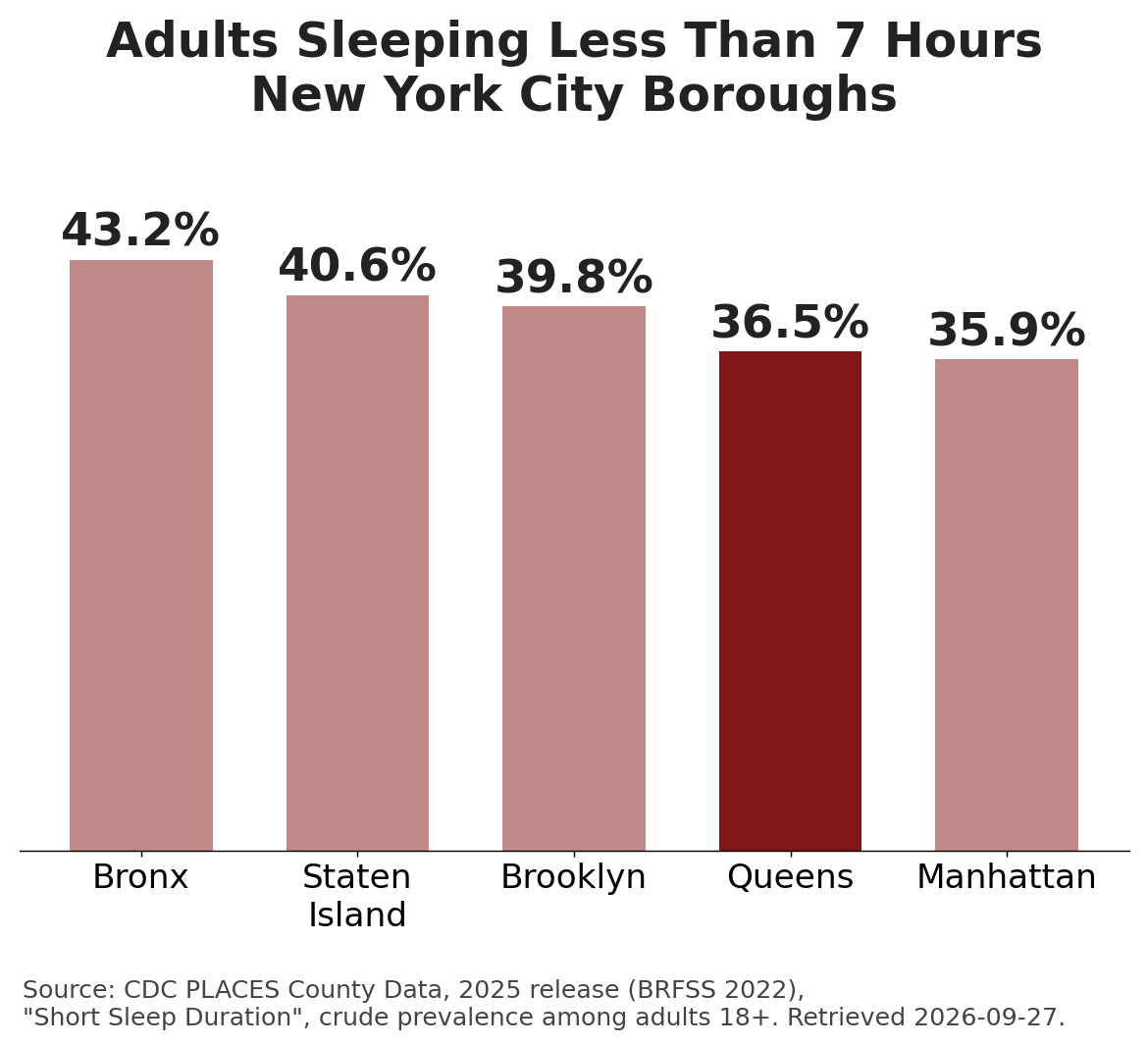
Short sleep is common across the city. According to CDC PLACES estimates, 36.5 percent of adults in Queens usually sleep less than 7 hours a night, compared with 43.2 percent in the Bronx and 35.9 percent in Manhattan. Not everyone who sleeps too little has a sleep disorder, but when poor sleep comes with loud snoring, gasping at night or heavy daytime fatigue, a proper evaluation is the next step, and the clinic you pick shapes how fast you get a clear answer.
Start With What The Clinic Actually Tests For
Sleep problems are not one single condition. Snoring, insomnia, restless legs, and pauses in breathing during the night can all look similar from the outside but require different kinds of evaluation. Before choosing a clinic, ask what conditions they are equipped to test for and diagnose. Some clinics focus narrowly on one type of study, while others are set up to evaluate a broader range of sleep disorders in one place. If you are not sure whether what you are experiencing is a passing issue or something that needs a real diagnosis, it helps to read up on how to tell normal sleep issues apart from sleep disorders before you even schedule anything.
In-Person Testing Versus At-Home Kits
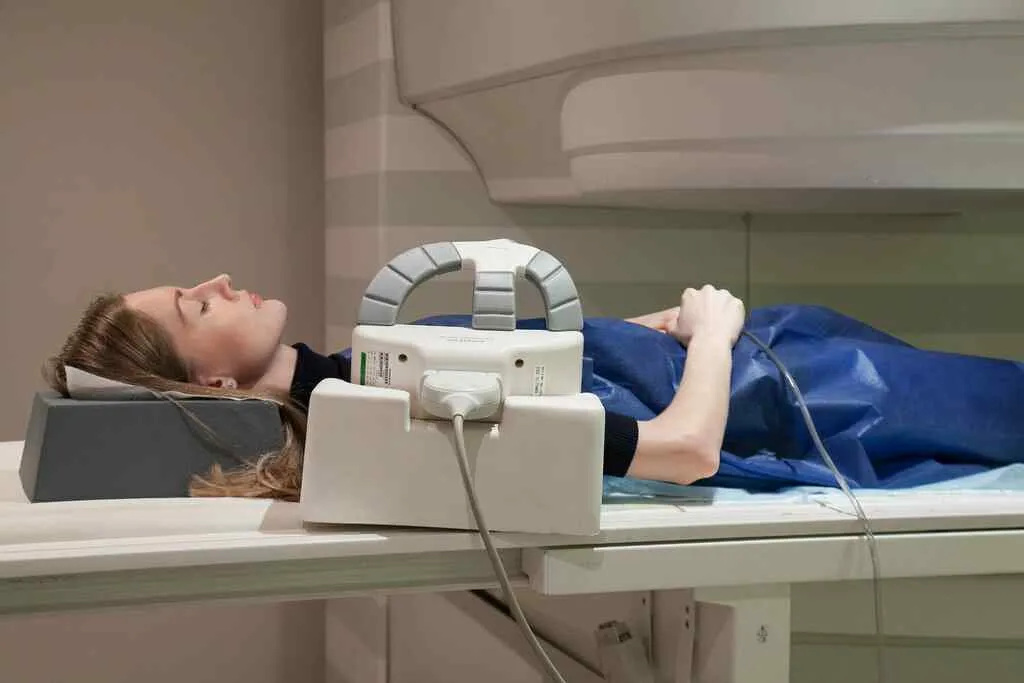
A lot of sleep clinics now offer take-home testing devices as an alternative to an overnight visit. These can be convenient, but they also have limits: they typically track fewer signals than a supervised in-person study, and if the data comes back incomplete or unclear, you may need to repeat the process. When you are comparing clinics in Queens, ask directly whether testing happens in-person, at home, or both, and what happens if a home test does not produce clear results. Home tests are a reasonable first step for many people with suspected obstructive sleep apnea. An in-person sleep study, done overnight with trained staff monitoring the recording, captures more signals and is the usual next step when a home test is inconclusive or a different sleep disorder is suspected. Our guide to at-home versus in-lab sleep study testing covers the trade-offs in detail.
Who Reviews Your Results, And How
Getting the test done is only half the process. The other half is understanding what the results mean for you. Some clinics send results back with little explanation, leaving patients to interpret numbers and terminology on their own or wait weeks for a follow-up call. A better standard is a clinic that sits down with you, walks through your results, explains the diagnosis in plain language, and outlines what comes next. If a clinic cannot clearly describe how results are reviewed and communicated, that is worth asking more about before you commit.
Continuity: Diagnosis, Treatment, And Follow-Up In One Place
One of the more frustrating experiences patients describe is being tested at one location, then referred elsewhere for treatment, and referred again for follow-up care, with records and context getting lost along the way. A clinic that handles sleep studies, apnea care, and follow-up under one roof removes a lot of that friction. It means the people reviewing your results are the same people helping you manage treatment afterward, and your history does not need to be re-explained at every stop. Vector, for example, sees patients back for CPAP follow-up visits at 30, 60 and 90 days after a sleep apnea diagnosis. When comparing clinics in Queens, ask plainly: if I am diagnosed here, do I also get treated and followed up with here, or will I be sent somewhere else?
Location And How Appointments Are Handled
Queens is a large borough, and travel time matters more than people expect, especially if you need to return for a follow-up visit or drop off equipment. A clinic based centrally, such as one in Rego Park, can be easier to reach from multiple neighborhoods across the borough and the wider city. It is also worth understanding who actually handles your scheduling and communication. Clinics that manage appointments with their own local team, rather than routing you through a distant call center, tend to be easier to reach when you have a question or need to adjust a visit. Vector’s office is at 62-60 99th Street in Rego Park, and appointments are booked directly with our own staff at (718) 830-2800.
The Range Of Sleep Disorder Services Offered
Sleep apnea gets a lot of attention, but it is not the only condition worth screening for. Insomnia, irregular sleep patterns, and other disorders can also affect health and quality of life, and they sometimes overlap with each other. A clinic that offers a wider range of sleep disorder services in Queens is better positioned to catch something that a narrower, apnea-only clinic might miss. Ask what the intake process looks like and whether it screens broadly or only for the condition you first mentioned on the phone.
How The Clinic Talks About Treatment Options
Not every case of sleep apnea is treated the same way, and a clinic worth choosing should be able to explain, honestly, what options exist and what factors affect which one fits your situation. Before you commit to a clinic, it is reasonable to ask how they approach treatment planning and whether they can walk you through realistic expectations. For general background on the range of approaches available, this overview of sleep apnea treatment options is a useful starting point. According to the National Heart, Lung, and Blood Institute, a positive airway pressure (PAP) machine is the most common treatment for sleep apnea, and there are different types of PAP devices, which is exactly why a clinic’s willingness to explain your specific case, rather than give a generic answer, matters.
Whether The Clinic Looks At The Whole Picture
Sleep does not exist in isolation from the rest of your health. Poor sleep has documented connections to weight and metabolic health, and there is also a well established relationship between sleep disorders and mental health in adults. A clinic that only looks at your airway or your sleep stages, without asking about the broader context of your health and daily habits, may miss factors that matter for your treatment plan. It is fair to ask whether the clinic considers things like weight, diet, and mental health history as part of your evaluation. For patients curious about the metabolic side of things, this piece on the connection between sleep disorders and obesity lays out why that context matters, and this resource on dietary recommendations for reducing sleep issues is worth a look if you want to understand the lifestyle side alongside clinical treatment. If your sleep issues feel more like everyday insomnia than a diagnosable disorder, it is also worth reading about natural remedies for insomnia before assuming a full sleep study is your only option.
Experience Matters More Than Marketing
What Experience Looks Like In Practice
Anyone can advertise sleep testing, but running a sleep diagnostic center well takes ongoing, hands-on experience: recognizing what a study result actually indicates, knowing how to explain it clearly to a patient who has never seen a hypnogram before, and coordinating the handoff from diagnosis into treatment without dropping details along the way. It is fair to ask any clinic how long it has been testing patients and roughly how many studies it runs.
How Vector Answers Those Questions
Vector Sleep Diagnostic Center has been testing patients in Queens since 2005 and runs 900 to 1,000 sleep studies a year. In-lab sleep studies are the core of what we do, and we also run EEG studies, including prolonged EEG monitoring over 7 to 14 days, which you can read about on our EEG testing page. We accept all major insurance plans, including Medicare and Medicaid, and results are reviewed with each patient directly.
Questions Worth Asking Before You Book
When you are down to comparing two or three clinics, a short list of direct questions can clarify things quickly:
- Is the sleep study conducted in-person, at home, or both, and what happens if results are unclear?
- Who reviews the results with me, and how is the diagnosis explained?
- If I need treatment, is that handled at the same clinic or through a referral elsewhere?
- What range of sleep disorders does the clinic screen for beyond apnea?
- How is scheduling handled, and who do I contact if I need to reschedule or ask a question?
- Does the clinic accept my insurance, and will it check what my plan requires before the study?
A clinic that can answer these clearly and specifically, without vague or rehearsed responses, is usually a good sign of how they will handle the rest of your care.
Comparing clinics right now? Call Vector Sleep Diagnostic Center with your questions from the list above. Our own team answers the phone in Rego Park.
Request an Appointment
Send your details below and our Rego Park team will contact you within one business day, or call (718) 830-2800.
Frequently Asked Questions
How do I know if I need a sleep study at all?
Common signs include loud snoring, gasping or choking during sleep, daytime fatigue despite a full night in bed, and being told by a partner that your breathing pauses at night. If any of these sound familiar, it is worth discussing a sleep evaluation with a clinic.
What is the difference between an in-person sleep study and a home sleep test?
An in-person study is conducted overnight in a clinical setting with staff monitoring multiple signals, while a home test uses a portable device you use on your own. In-person testing records more signals, and if a home test comes back inconclusive, an in-lab study is the usual next step.
Will I get my results explained to me, or just a report?
This varies by clinic. At Vector Sleep Diagnostic Center, results are reviewed with each patient directly so they understand the diagnosis and the recommended next steps, rather than being left to interpret a report alone.
Can the same clinic handle both diagnosis and treatment?
Some clinics only test and then refer patients elsewhere for treatment. Others, including Vector Sleep Diagnostic Center, provide studies, apnea care, and follow-up in one place, which keeps your care more consistent.
Where is Vector Sleep Diagnostic Center located?
The center is at 62-60 99th Street in Rego Park, Queens, and has served patients from across New York City since 2005. Appointments are scheduled directly with the clinic’s own team at (718) 830-2800.
Choosing a sleep clinic in Queens comes down to a few clear questions: how the testing is done, how results are explained, and whether diagnosis and follow-up happen in one coordinated place. If you are ready to get answers about your sleep, call Vector Sleep Diagnostic Center in Rego Park at (718) 830-2800 or request an appointment online.