How Lifestyle Changes Can Support Sleep Apnea Treatment
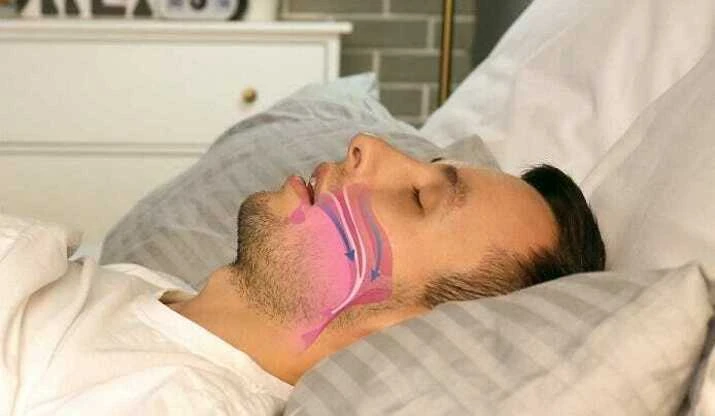
Lifestyle changes support sleep apnea treatment by reducing the pressure on the airway and removing things that make it collapse more easily. The ones with the strongest backing are a healthy weight, sleeping off your back, limiting alcohol, quitting smoking, and staying physically active. This guide explains how each one works, what the evidence says, and when you need a sleep specialist. It also shows how these habits fit alongside sleep apnea care at Vector Sleep Diagnostic Center in Rego Park, Queens.
This article was reviewed by Dmitriy Kolesnik, MD, a neurologist board certified in Sleep Medicine and Medical Director of Vector Sleep Diagnostic Center in Rego Park, Queens.
Vector has served patients since 2005 and runs 900 to 1000 overnight sleep studies a year. Our medical director, Dr. Dmitriy Kolesnik, is board certified in neurology and sleep medicine. Sleep Foundation estimates that 30 million adults in the United States have sleep apnea, and many have never been tested.
Which Lifestyle Changes Help Sleep Apnea?
The table summarizes the habits clinicians most often discuss and what each one targets. Details follow below.
| Habit | What it targets | What to know |
|---|---|---|
| Healthy weight | Fat around the neck and upper airway | Weight is a major modifiable risk factor for obstructive sleep apnea |
| Side sleeping | Tongue and soft palate falling back | Most useful when events happen mostly on your back |
| Limiting alcohol | Throat muscles relaxing too much | Even daytime drinking may worsen breathing at night in untreated sleep apnea |
| Quitting smoking | Airway irritation and swelling | Listed by the NHLBI among helpful lifestyle changes |
| Regular exercise | Overall fitness and sleep quality | Listed by the NHLBI as very effective for sleep apnea |
| Mouth and throat exercises | Muscle tone of the tongue and soft palate | A 2015 meta-analysis found about a 50 percent drop in AHI in adults |
Weight and Airway Collapse
Body weight is one of the main modifiable risk factors for obstructive sleep apnea. Sleep Foundation reports that studies link a higher body mass index with a higher risk of the condition, and the NHLBI lists maintaining a healthy weight among the lifestyle changes that can be very effective. Tissue around the neck and upper airway narrows the passage, so there is less room for air when throat muscles relax in sleep.
Poor sleep and weight can feed each other, which is why a steady, sustainable plan usually works better than a crash diet. Talk with your physician about a realistic goal. For people with moderate to severe sleep apnea and obesity, the NHLBI notes that the FDA has approved a weight loss medicine, and that is a conversation for your doctor, not something to start on your own.
Sleep Position and Gravity
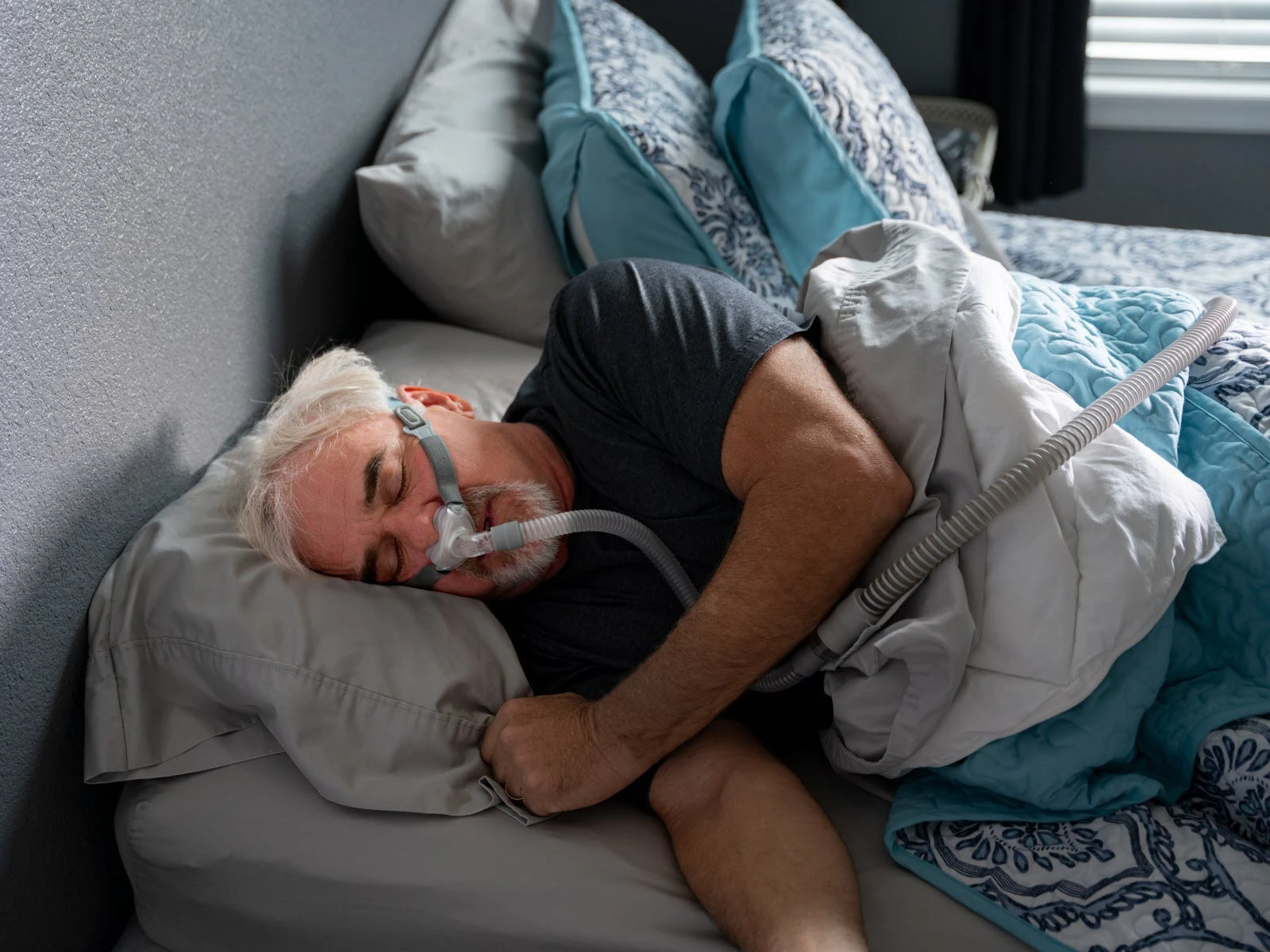
When you lie on your back, gravity pulls the tongue and soft palate toward the back of the throat. In some people most breathing events happen in that position, and sleeping on the side keeps the airway more open. The NHLBI says your provider may recommend sleeping on your side, not on your back.
- Body pillow: a long pillow against your back makes rolling over less likely.
- Positional device: products made to discourage back sleeping exist. Sleep Foundation notes they have not been rigorously studied but may help some people.
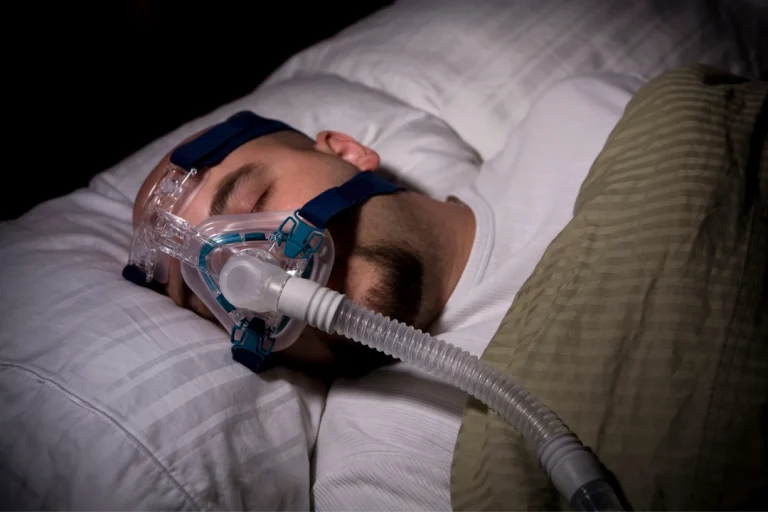
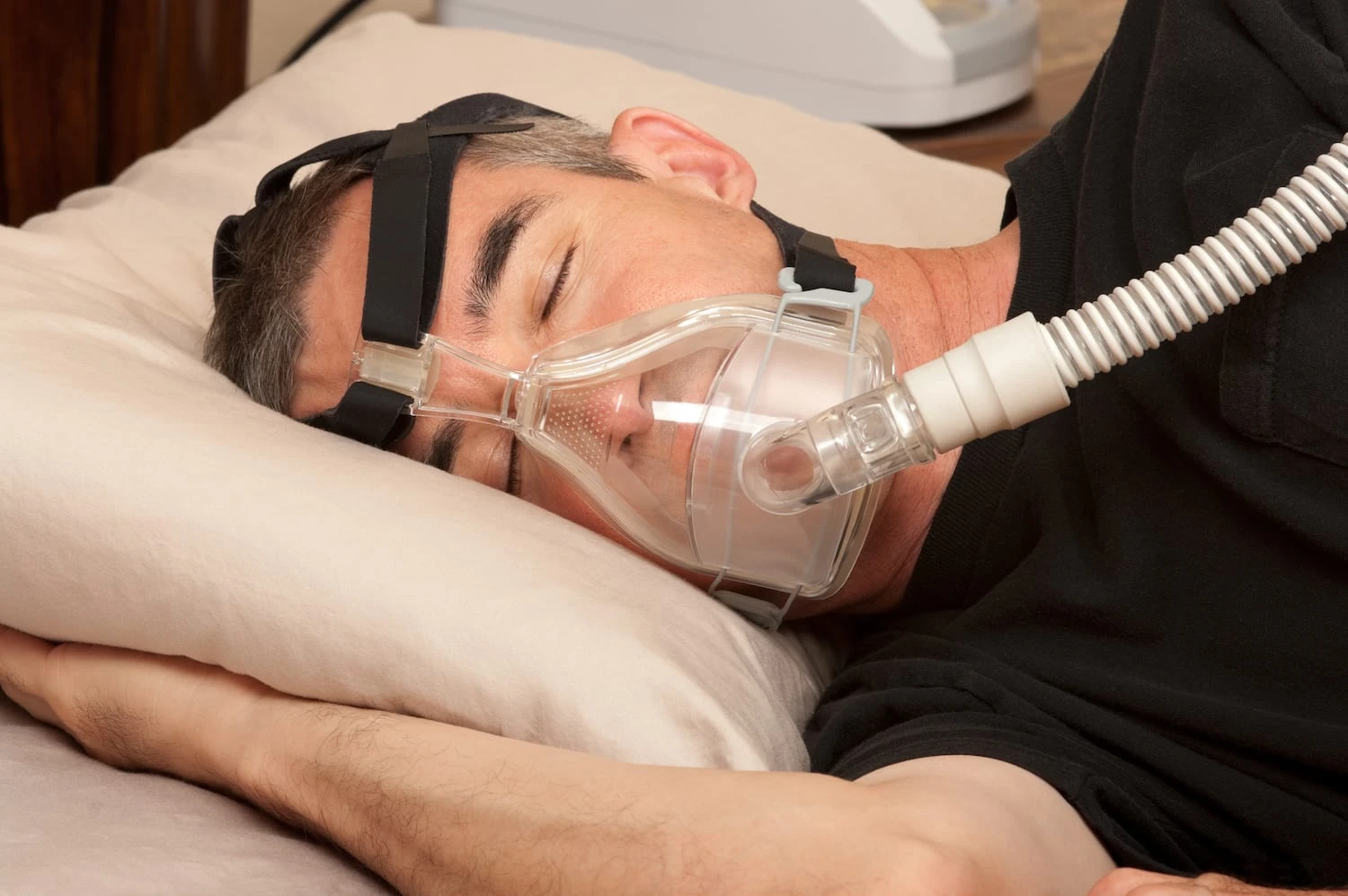
- If you use a PAP mask: ask your physician before adding a positional product, so your sleep setup stays comfortable and your mask keeps sealing.
Alcohol, Smoking and Caffeine
Alcohol relaxes the muscles of the throat. Sleep Foundation reports that in people with untreated obstructive sleep apnea, even daytime alcohol use may worsen breathing problems at night, and the NHLBI advises limiting alcohol and caffeine. If you drink, ask your physician how much is reasonable for you, and avoid drinking close to bedtime.
Smoking irritates and inflames the airway, and the NHLBI includes quitting smoking in its list of helpful lifestyle changes. Caffeine is less direct. It does not cause apnea, but late caffeine makes it harder to fall asleep and to judge how rested you really are, so keep it to earlier in the day.
Exercise and Mouth and Throat Training
Regular physical activity is on the NHLBI list of lifestyle changes that can be very effective for sleep apnea. Another option is myofunctional therapy, a set of exercises for the tongue, soft palate and throat. A systematic review and meta-analysis of nine adult studies (120 patients) in the journal Sleep (Camacho et al., 2015) found the apnea hypopnea index fell by about 50 percent in adults, and concluded that the therapy could serve as an adjunct to other treatments. That makes it a supporting tool, not a replacement for CPAP or an oral appliance.
When Lifestyle Changes Are Not Enough
- Severity: mild cases are sometimes managed with lifestyle changes first. Moderate and severe cases usually need PAP therapy or another treatment alongside them.
- Other conditions: high blood pressure, heart disease and diabetes need coordination between your sleep specialist and your primary care physician.
- Sleepiness while driving: if you feel drowsy behind the wheel, do not wait for habits to take effect. Get evaluated.
- No diagnosis yet: changing habits without a sleep study means you cannot tell what is actually wrong or whether it improved.
A sleep study gives the baseline for everything above. See how to get diagnosed with sleep apnea, compare a hospital sleep lab with a sleep center, and avoid the common first sleep study mistakes. If you are already on treatment, read how our sleep apnea treatment can help you breathe better at night and our broader sleep apnea treatment guide.
Frequently Asked Questions
Does sleeping position really matter?
For some people it does. In certain patients breathing pauses happen mostly when they lie on their back, and moving to the side reduces them. Sleep Foundation notes that products designed to prevent back sleeping may help some people, although they have not been rigorously studied. A sleep study shows whether your events are position dependent.
Can exercise improve sleep apnea without weight loss?
The National Heart, Lung, and Blood Institute lists regular physical activity among the lifestyle changes that can be very effective for sleep apnea. How much exercise helps you, with or without weight change, is a question for your physician after reviewing your sleep study.
Do I have to give up caffeine completely?
Not necessarily. The NHLBI advises limiting caffeine and alcohol rather than banning them. Keeping caffeine to the earlier part of the day is a sensible first step if you also struggle to stay asleep.
How long do lifestyle changes take to show results?
It varies from person to person. The only way to measure the effect on your apnea is a repeat sleep study, which your physician can order after you have kept the changes going for a while. Do not stop PAP therapy or any prescribed treatment to test a lifestyle change.
Do nasal strips help with sleep apnea?
Nasal strips may help if nasal congestion is part of your problem, but they do not treat the throat collapse behind obstructive sleep apnea. If you snore or wake gasping, ask for a sleep evaluation instead of relying on a strip.
Can lifestyle changes replace CPAP?
For some people with mild sleep apnea, a physician may start with lifestyle changes. For many others they support PAP therapy or an oral appliance rather than replace it. Your sleep study results and your physician decide which applies to you.
Ready to find out where you stand? The team at Vector Sleep Diagnostic Center in Rego Park, Queens, can arrange a sleep study and review the results with you. Email vectorsleep@gmail.com or call (718) 830-2800.
Sources
- National Heart, Lung, and Blood Institute: Sleep Apnea Treatment, healthy lifestyle changes and side sleeping
- Sleep Foundation: Sleep Apnea, prevalence, weight, alcohol and positional devices
- Camacho M et al. Myofunctional Therapy to Treat Obstructive Sleep Apnea: A Systematic Review and Meta-analysis. Sleep, 2015