At-Home Sleep Studies vs In-Clinic Polysomnography
If you are asking how at-home sleep studies compare to in-clinic polysomnography, the choice depends on your specific symptoms and overall health. For straightforward cases of suspected moderate to severe obstructive sleep apnea with no complicating medical conditions, home testing offers a practical, convenient option that can accurately diagnose the condition about 90% of the time. However, if you have underlying health issues, complex sleep symptoms, or need evaluation for conditions beyond sleep apnea, an in-lab polysomnography provides comprehensive data that home tests simply cannot capture. Understanding which test serves your needs requires examining how each option works and what trade-offs exist between convenience and diagnostic depth.
Sleep studies monitor breathing patterns, oxygen levels, heart rate, and other biological signals to detect sleep disorders. The two main approaches, home sleep apnea tests and laboratory polysomnography, differ significantly in scope, accuracy, and what they can reveal about your sleep health. Making an informed decision means weighing these differences against your personal situation.
How At-Home Sleep Studies Work
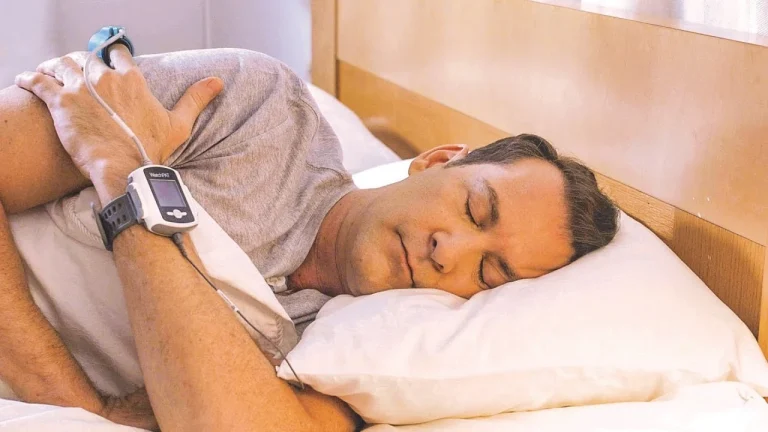
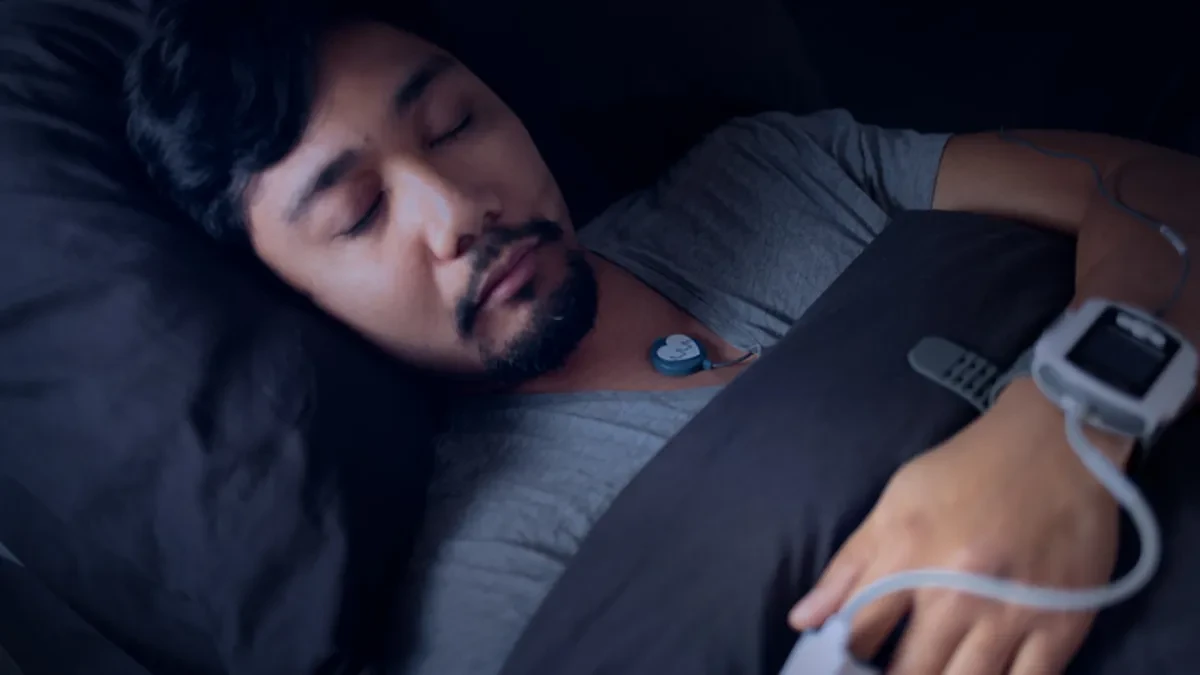
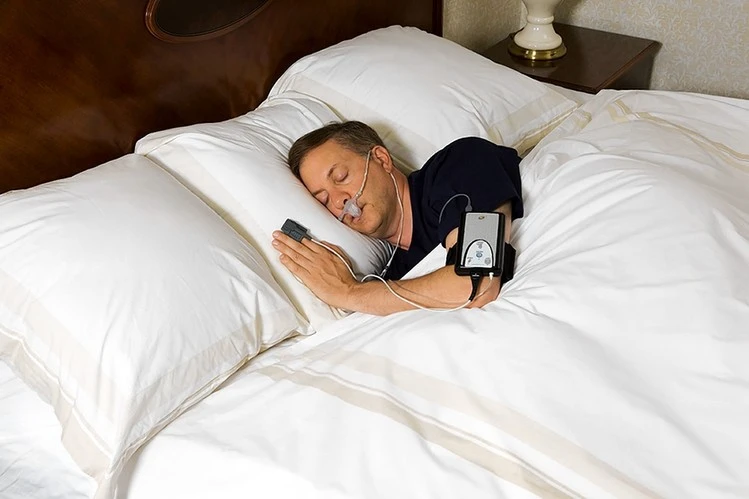
An at-home sleep study involves using a portable monitoring device that you set up yourself before going to bed. The equipment typically includes sensors for measuring blood oxygen saturation through a finger clip, chest bands to detect breathing effort, and sometimes a nasal cannula to track airflow. You wear the device overnight in your own bed, then return it to the sleep center or mail it back for analysis.
Home tests focus primarily on breathing-related measurements. According to Mayo Clinic experts, these devices monitor oxygen levels, chest movement during breathing, blood volume changes, body movement, and nasal pressure in some models. The technology has advanced significantly, making home testing accessible and practical for many patients.
The main advantage of home testing lies in convenience. You sleep in your own bed, which can eliminate the “first night effect” where unfamiliar surroundings might affect your sleep quality. For people living in areas without nearby sleep clinics, home testing removes travel barriers and scheduling challenges. Many insurance plans prefer home testing as an initial diagnostic step due to lower costs.
However, home tests have notable limitations. Most do not include EEG monitoring, meaning they cannot determine sleep stages or accurately distinguish between time spent awake versus asleep. The data focuses on breathing metrics, so conditions like narcolepsy, parasomnias, or periodic limb movement disorder may go undetected. Research from University Hospitals indicates that home tests may over-diagnose or under-diagnose sleep apnea in some cases due to these measurement constraints.
How In-Lab Sleep Studies Work
Polysomnography takes place in a sleep laboratory where trained technicians monitor you throughout the night. The setup involves multiple sensors attached to your scalp, face, chest, and legs. These sensors track brain waves through electroencephalography, eye movements, muscle activity, heart rhythm through electrocardiography, oxygen levels, breathing patterns, and body position.
The comprehensive monitoring during in-lab studies provides far more detailed information than home testing. Sleep specialists can identify exactly when you enter different sleep stages, detect abnormal movements, distinguish between obstructive and central sleep apnea, and recognize patterns that suggest other disorders. According to Mayo Clinic’s sleep experts, polysomnography serves as the gold standard for diagnosing sleep disorders beyond simple breathing problems.
Another significant benefit of in-lab testing involves immediate treatment capability. If technicians identify severe sleep apnea during the study, they can often initiate CPAP therapy that same night and find the optimal therapeutic pressure. This speed of diagnosis and treatment initiation can be valuable for patients with severe symptoms.
The clinical environment also ensures higher data quality. Laboratory studies have much lower rates of poor-quality recordings compared to home tests, where equipment malfunction or sensor detachment might compromise results. Technical staff can address issues in real time, repositioning dislodged sensors and ensuring consistent data collection throughout the night.
Some patients express concern about sleeping in an unfamiliar setting with attached sensors. However, nearly everyone does fall asleep during the test, and sleep specialists understand that one night in a lab will differ from typical home sleep. The goal is to gather enough data for diagnosis, and even two or more hours of sleep can provide sufficient information for an accurate assessment.
Comparing Key Features
| Feature | At-Home Sleep Study | In-Lab Polysomnography |
|---|---|---|
| Measurement scope | Breathing, oxygen, chest movement | Brain waves, sleep stages, heart rhythm, movements, breathing, and oxygen |
| Accuracy for OSA | ~90% for moderate to severe cases | High accuracy for all severity levels |
| Conditions diagnosed | Primarily obstructive sleep apnea | Sleep apnea, narcolepsy, parasomnias, limb movements, insomnia |
| Comfort | Own bed, minimal equipment | Clinical setting, multiple sensors |
| Data quality control | User-dependent, potential for errors | Professional monitoring throughout |
| Same-night treatment | Not available | CPAP titration often possible |
| Cost | Lower ($150-$500) | Higher ($500-$3,000+) |
| Insurance coverage | Often preferred first step | May require home test first |
Things to Consider Before Making a Decision
Before choosing between home and lab testing, evaluate several factors that influence which option serves you best.
Symptom complexity matters. If your only concern is snoring and daytime sleepiness without other sleep complaints, home testing may suffice. However, if you experience excessive daytime sleepiness that hits suddenly, leg movements during sleep, complex sleep behaviors, or insomnia that persists despite treatment, the comprehensive data from a lab study becomes essential.
Current health conditions play a significant role. Research indicates that patients with congestive heart failure, chronic obstructive pulmonary disease, or severe obesity may receive inaccurate results from home testing. Conditions that cause oxygen drops during sleep, unrelated to apnea, can confuse home test results. Your doctor will help determine whether your medical history makes home testing appropriate or potentially misleading.
Your suspected diagnosis guides the choice. Home testing works well for confirming or ruling out obstructive sleep apnea in otherwise healthy individuals. If your doctor suspects central sleep apnea, complex sleep apnea, or non-breathing-related disorders, in-lab testing provides the diagnostic precision needed for accurate treatment planning.
Geographic and logistical factors influence feasibility. Travel time to a sleep lab, scheduling flexibility, and insurance requirements all impact the practical choice between options. Some regions have limited sleep centers, making home testing the only reasonable initial approach.
Consider the follow-up path. A negative or inconclusive home test often leads to an in-lab study anyway, so it helps to understand the sleep study results timeline before you choose a starting point. If you suspect your situation might ultimately require lab confirmation, starting with polysomnography might save time and additional testing.
When Home Testing May Not Be Enough
Despite the convenience and reasonable accuracy of home sleep studies, certain situations call for in-lab evaluation regardless of initial testing plans.
Patients who do not respond to initial treatment may need more detailed data to understand why therapy is not working. Complex sleep apnea, where both obstructive and central events occur, typically requires lab monitoring for proper diagnosis and pressure adjustment. Additionally, if you have coexisting sleep disorders, a home test will likely miss them, leading to incomplete treatment and persistent symptoms.
The equipment limitations of home devices mean they cannot capture the full picture of your sleep architecture. Without EEG data, specialists cannot determine whether you are spending adequate time in restorative deep sleep or REM sleep stages. Persistent fatigue despite treatment might indicate that something beyond simple apnea is disrupting your sleep.
Common Questions
Can I do a home sleep study without a doctor’s order?
While some companies offer direct-to-consumer sleep tests, most insurance plans and medical guidelines require a physician referral. A proper evaluation should include a discussion of your symptoms, medical history, and examination to determine which testing approach suits your situation.
Will I be able to sleep with all the equipment from a home test?
Most people adapt quickly to home testing equipment. The devices are designed to be minimally intrusive, and wearing them in your own bed typically feels more natural than lab sensors. Technical support from your sleep center can help address any comfort concerns.
How long does it take to get results from each type of test?
Home test results often process faster since there is less data to analyze. Lab studies produce comprehensive reports requiring specialist review, which may take longer. However, some sleep centers have streamlined workflows that provide results within a similar timeframe.
What happens if my home test is negative but I still have symptoms?
A negative home test does not rule out sleep apnea definitively. Many patients with high pre-test probability still require in-lab confirmation when home results are negative or unclear. Discuss persistent symptoms with your healthcare provider to determine next steps.
Bonus Tips Based on Practical Experience
When preparing for a home sleep test, ensure your bedroom environment stays consistent with your normal sleep conditions. Avoid alcohol and sedatives on the test night, as these substances can artificially improve or worsen breathing patterns unrepresentative of your typical sleep.
For in-lab studies, bring personal items that help you feel comfortable, such as your own pillow or specific sleepwear. While you cannot control the lab environment completely, small comforts can help you relax enough to achieve adequate sleep for an accurate diagnosis.
If both options are available to you, ask your physician specifically why they recommend one over the other. The recommendation should reflect your individual symptoms, health history, and diagnostic goals rather than defaulting to whichever is more convenient.
Finding the Right Testing Approach
Choosing between at-home and in-lab sleep studies ultimately depends on matching the testing method to your specific clinical situation. Home testing offers convenience and reasonable accuracy for uncomplicated suspected sleep apnea, while in-lab studies provide comprehensive data for complex presentations. Working with a sleep medicine specialist helps ensure you pursue the diagnostic path most likely to identify your specific condition and lead to effective treatment.
If you’re unsure whether a sleep study is right for you, reach out to Vector Sleep Diagnostic Center at vectorsleep@gmail.com or call +1 718-830-2800. Our experienced team will assess your symptoms and guide you toward the most suitable testing option for an accurate diagnosis and effective treatment plan.
Sources
- Mayo Clinic Press – Expert guidance on sleep apnea testing options and their appropriate applications
- University Hospitals – Comparison of home testing and laboratory polysomnography with clinical recommendations