
EEG Testing and At-Home Sleep Disorder Diagnostics in Queens, NY
EEG testing records the electrical activity of your brain to find the cause of nighttime symptoms that other tests miss. At Vector Sleep Diagnostic Center in Rego Park, Queens, an EEG can reveal whether involuntary movements during sleep, from leg and arm jerking to full-body shaking and night terrors, point to nocturnal seizures or another sleep disorder. Many of these problems happen only at night, so most people never see them and never get answers. This page explains what an EEG measures, which nighttime movements are worth checking, and how Vector’s multi-day wireless EEG lets you get tested while you live your normal life.
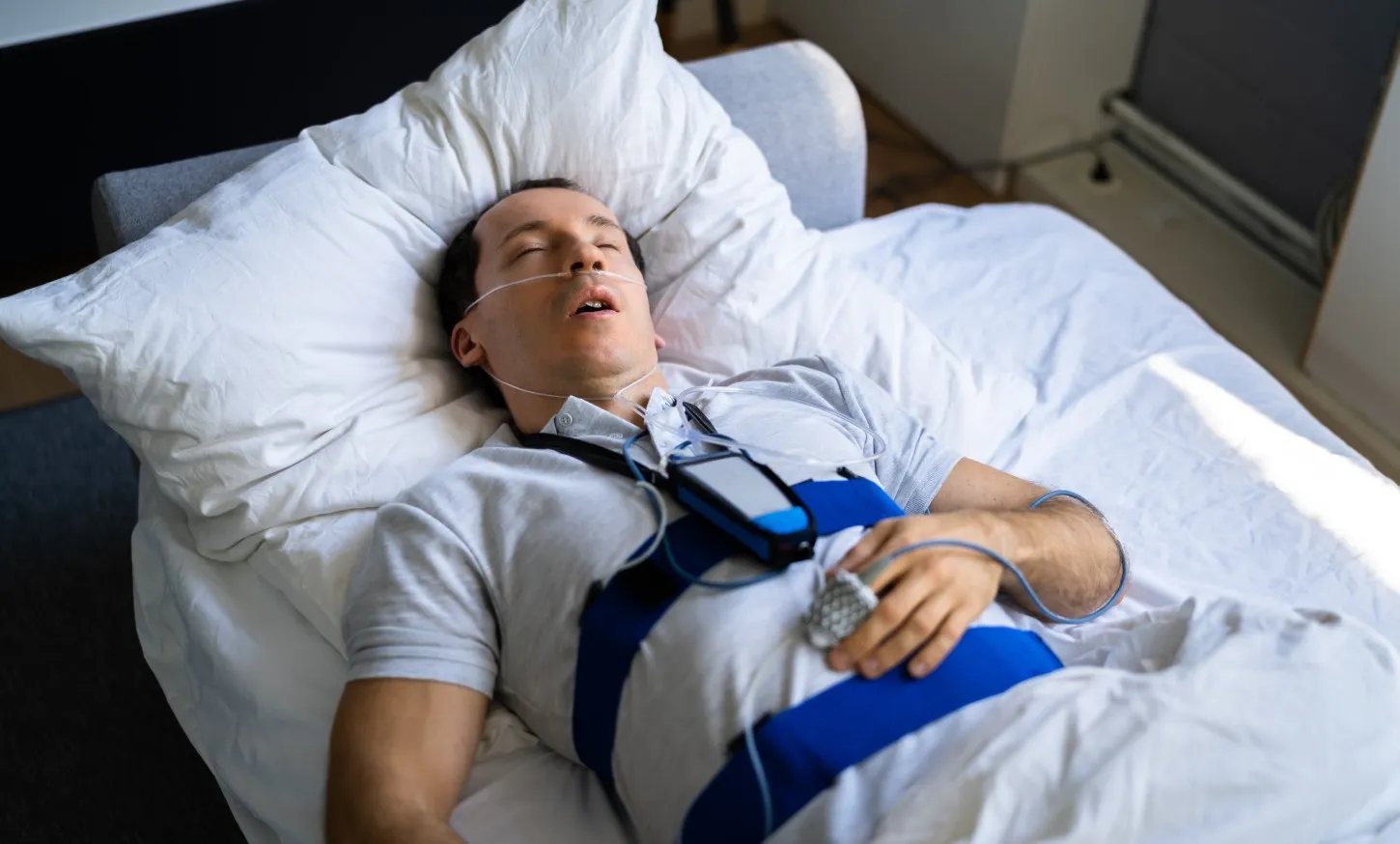
What Is an EEG Test?
An electroencephalogram, or EEG, is a test that records the electrical signals your brain produces. Small sensors called electrodes sit on the scalp and detect the tiny voltage changes that neurons create as they fire. A specialist then reads the recording to find patterns that signal a seizure, a sleep disorder, or another neurological event.
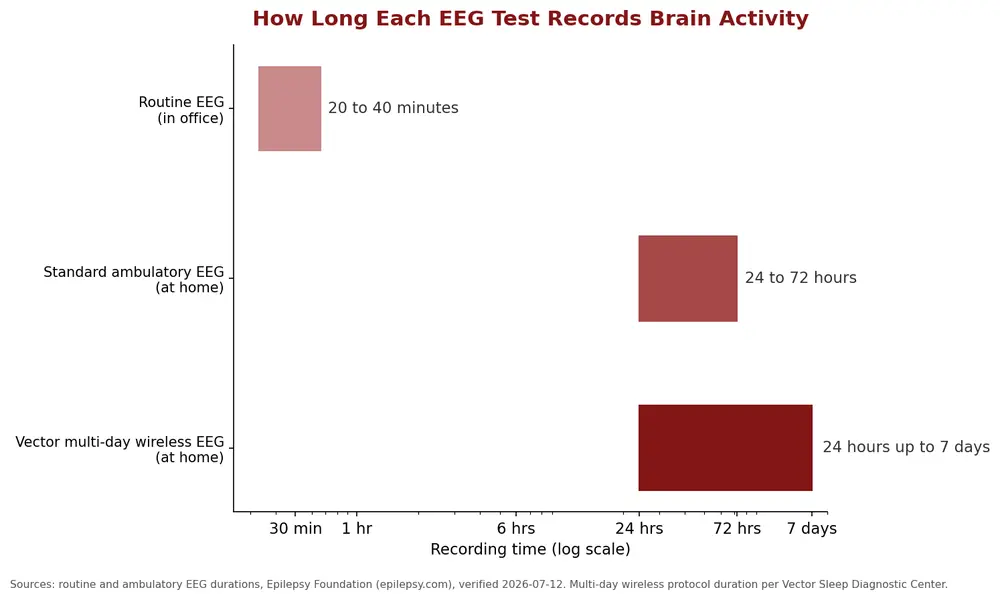
A routine EEG in a clinic lasts about twenty to forty minutes. That short window is often too brief to catch events that happen only at certain times, especially during sleep.
This is why an ambulatory EEG exists. It records for a day or several days while you go about your life, so it can capture events a short in-office test would miss. The Epilepsy Foundation describes ambulatory EEG as an extended recording used precisely when brief tests come back inconclusive.
Nighttime Body Movements You Should Not Ignore
Involuntary movements during sleep are common, and most are harmless. Some, though, are the first visible sign of a condition that needs treatment. Because these movements happen while you sleep, you rarely witness them yourself, and a partner may be the only reason you know they occur at all.
Common Causes of Involuntary Movements During Sleep
Several distinct conditions cause the body to move during sleep, and telling them apart is exactly what testing is for. The most frequent include:
- Hypnic jerks, the brief single twitches many people feel as they drift off, which are usually benign
- Periodic limb movement disorder, repeated rhythmic leg or arm movements through the night
- Restless legs syndrome, an urge to move the legs that intrudes on rest, covered on our restless leg syndrome treatment page
- Sleepwalking and night terrors, which can involve dramatic movement and distress
- REM sleep behavior disorder, in which a person physically acts out dreams
Dizziness, brain fog, and falls that follow a bad night can accompany any of these, and they are worth reporting when you come in.
When Movements May Point to Nocturnal Seizures
Some nighttime movements signal seizure activity rather than an ordinary sleep event. Nocturnal seizures can cause stiffening, rhythmic jerking, or complex whole-body movements, and they often last less than two minutes. Warning signs that point toward a seizure rather than a benign jerk include confusion on waking, a bitten tongue, loss of bladder control, or several episodes in one night. The Sleep Foundation reports that nocturnal seizures affect up to fifteen percent of people with epilepsy. An EEG is the test that tells these apart with confidence.
Why Nocturnal Seizures Go Undiagnosed
Nocturnal seizures go undiagnosed because they happen only during sleep, when no one is watching. A person can live for years with brain fog, unexplained falls, and morning exhaustion without ever connecting them to a nighttime event they cannot see.
Many people first learn something is wrong when they come in for a sleep study for a different reason, such as snoring evaluated during sleep apnea care or insomnia, and the recording picks up abnormal activity. Vector Sleep Diagnostic Center runs the sleep study, the EEG, the diagnosis, and the follow-up care together, so a problem that surfaces during one test does not fall through the cracks.
Multi-Day Wireless EEG Monitoring at Vector Sleep Diagnostic Center
Vector’s multi-day wireless EEG records brain activity for far longer than a routine in-office test, without tethering you to a machine. Traditional EEG monitoring means a headful of wires connected to a recorder you carry everywhere, which is uncomfortable and loosens when you move, degrading the recording. Vector uses a wireless approach designed to record cleanly while you live normally.
How the Wireless EEG Works
The wireless device uses a small set of discreet electrodes and no trailing wires. A technician places the sensors during a short visit and shows you how the device works. You then wear it at home while it records continuously. Because there is no recorder box to manage and no tangle of cables, the test blends into daily life instead of interrupting it.
Living Normally During the Test
You keep your routine while the wireless EEG records. Vector’s protocol is built so that you can go to work, run errands, and stay active during the monitoring period rather than sitting still in a lab. This matters because the nighttime seizures and abnormal movements the test looks for only appear during ordinary sleep in your own bed. A test that forces you out of your normal environment is less likely to catch them.
Remote Monitoring That Can End the Test Early
Vector’s protocol allows the clinical team to review the recording remotely while it is underway. If the data already shows what the specialist needs to make a diagnosis, the test can be stopped early rather than running the full planned period. You wear the device only as long as the diagnosis actually requires.
Routine EEG, Ambulatory EEG, and Sleep Study: Which Test Do You Need?
Different symptoms call for different tests, and often more than one works together. A routine EEG is a short in-office snapshot. An ambulatory EEG records over days to catch events a snapshot misses. A sleep study, or polysomnography, records breathing, oxygen, heart rate, leg movements, and brain waves across a full night to diagnose sleep disorders.
Vector offers all of them under one roof as part of its full range of sleep disorder services in Queens. A single team can pair a sleep study with EEG monitoring when your symptoms sit at the border between a sleep disorder and a seizure.
If you are weighing an at-home test against an in-lab study, our comparison of at-home versus in-lab sleep studies walks through the trade-offs.
What Happens After Your EEG Results
A test only matters if it leads somewhere. Once your EEG recording is complete, a specialist reviews the full study and Vector’s team goes over the findings with you directly.
If the recording shows nocturnal seizures, the team explains what that means and coordinates neurological care. If it points to a sleep disorder such as periodic limb movement disorder or restless legs syndrome, the path moves toward the right treatment for that condition.
Board-certified neurologist and sleep medicine specialist Dr. Dmitriy Kolesnik, MD leads the clinical work at the center; you can read more on the Dr. Kolesnik profile. Care continues through follow-up rather than ending at the diagnosis.
Related Guides on Nighttime Symptoms and Sleep Testing
These guides go deeper on the questions this page raises:
- Nocturnal seizures: signs, symptoms and testing
- EEG vs sleep study: which test do you need?
- Periodic limb movement disorder: testing and care
Visiting Vector Sleep Diagnostic Center in Rego Park, Queens
Vector Sleep Diagnostic Center sits at 62-60 99th Street in Rego Park, Queens, and serves patients from across Manhattan, Brooklyn, the Bronx, Staten Island, and all of Queens. Rego Park connects to Manhattan by the E, F, M, and R subway lines along Queens Boulevard, so the trip from most Manhattan neighborhoods runs about twenty to thirty minutes. Vector Sleep Diagnostic Center has served patients in Rego Park, Queens, since 2005. To ask about EEG testing or schedule an evaluation, call the clinic directly.
Request an Appointment
Send your details below and our Rego Park team will contact you within one business day, or call (718) 830-2800.
Frequently Asked Questions
How do I know if I had a seizure in my sleep?
You often cannot know on your own, which is what makes nocturnal seizures hard to catch. Clues include waking confused, a bitten tongue or cheek, unexplained bruises, loss of bladder control overnight, or a partner who has seen you stiffen or jerk. Morning exhaustion, brain fog, and dizziness can follow. An EEG that records while you sleep is the reliable way to confirm whether a seizure occurred.
What is the difference between an EEG and a sleep study?
An EEG records the electrical activity of your brain and is the primary test for seizures. A sleep study, or polysomnography, records breathing, blood oxygen, heart rate, leg movements, and brain waves together to diagnose sleep disorders such as sleep apnea. The two answer different questions, and Vector Sleep Diagnostic Center can run both and combine them when your symptoms need it.
How long does an ambulatory EEG take?
A routine in-office EEG lasts about twenty to forty minutes. An ambulatory EEG records for longer, commonly twenty-four to seventy-two hours, and extended protocols can run several days. Vector’s multi-day wireless protocol can record up to about a week when the situation calls for it, and can be ended early once the recording captures what the specialist needs.
Can I go to work during a multi-day EEG test?
Yes. Vector’s wireless EEG is designed so you can keep your normal routine during the recording, including going to work and staying active. The device uses discreet electrodes and no trailing wires, so it does not confine you to a lab or a bed while it records.
Are body jerks when falling asleep dangerous?
Usually not. A single twitch as you drift off is called a hypnic jerk, and it is a normal, harmless event that most people experience. Movements become worth investigating when they are repeated through the night, come with confusion or injury, or are paired with daytime symptoms like brain fog and falls. An evaluation sorts the harmless from the meaningful.
Do I need a referral for EEG testing in Queens?
You can contact Vector Sleep Diagnostic Center directly to ask about EEG testing and start the process. Some insurance plans require a referral for coverage, and the clinic’s team can tell you what your specific plan needs when you call. You do not have to wait for a referral to reach out and get your questions answered.