What Is the Link Between Snoring and Sleep Apnea in Franklin Square, NY?
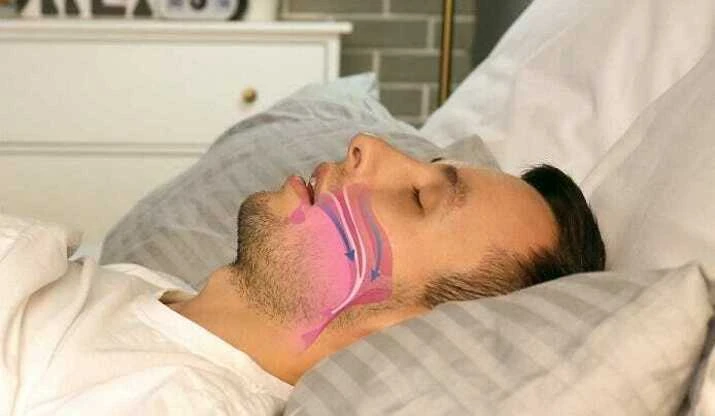
Snoring and sleep apnea share the same root cause, a narrowed or partially blocked upper airway, but they differ in a critical way. Snoring is the sound of tissues vibrating as air squeezes through a restricted passage. Sleep apnea means those tissues close completely, forcing you to stop breathing for 10 seconds or longer, sometimes dozens of times an hour. Not everyone who snores has sleep apnea, and not everyone with sleep apnea snores, but the two conditions sit on the same spectrum. Over time, loud, habitual snoring can be the first visible sign that obstructive sleep apnea (OSA) is developing or already present.
We have spent years evaluating patients across Franklin Square, NY and surrounding Nassau County communities, and the pattern is remarkably consistent. Most people who come in for a sleep study started with a complaint from a bed partner about snoring. Many assumed it was harmless. Understanding the connection between these two conditions matters because untreated sleep apnea raises the risk of high blood pressure, heart disease, stroke, and diabetes.
How Snoring and Sleep Apnea Share the Same Mechanics
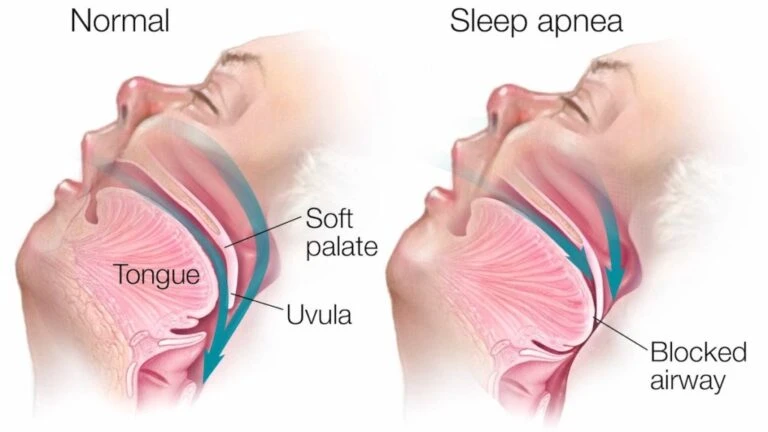
When you fall asleep, the muscles supporting your tongue, soft palate, and throat relax. For most people, this relaxation narrows the airway slightly but still allows normal breathing. In someone who snores, that narrowing is enough to make the soft tissues vibrate as air passes through, producing the familiar rattling sound.
In obstructive sleep apnea, the narrowing goes further. The airway collapses entirely, cutting off airflow. Your brain registers a drop in blood oxygen and briefly wakes you, often with a gasp or snort, so you can breathe again. These micro-arousals happen so fast you rarely remember them, but they fragment your sleep cycle and prevent you from reaching the deep, restorative stages of rest.
According to SleepApnea.org, snoring and OSA exist on a spectrum, meaning a person’s snoring can evolve into sleep apnea over time as weight changes, muscle tone decreases, or other risk factors accumulate. That is why repeat sleep evaluations are sometimes recommended even after an initial normal result.
The Numbers Behind the Problem
Obstructive sleep apnea is far more common than most people realize. The American Academy of Sleep Medicine reports that at least 25 million U.S. adults currently have OSA, and roughly 26% of adults between 30 and 70 meet the criteria. In communities like Franklin Square, where many residents commute long hours and manage busy schedules, these figures translate to thousands of individuals who may be sleeping poorly without knowing why.
Globally, the scale is even larger. Research published in StatPearls by the National Institutes of Health estimates that OSA affects nearly 1 billion people worldwide, with 425 million adults between 30 and 69 experiencing moderate to severe forms of the disorder.
Simple Snoring vs Obstructive Sleep Apnea
One of the most common questions we hear in our practice is how to tell the difference between harmless snoring and something that needs medical attention. The table below breaks down the key distinctions.
| Feature | Simple Snoring | Obstructive Sleep Apnea |
|---|---|---|
| Breathing | Continuous, though noisy | Repeated pauses of 10+ seconds |
| Sound pattern | Steady vibration | Loud snoring followed by silence, then gasping |
| Daytime impact | Usually none | Excessive sleepiness, fatigue, brain fog |
| Morning symptoms | Occasionally dry mouth | Morning headaches, sore throat, unrefreshed feeling |
| Long-term health risk | Generally low | Increased risk of heart disease, stroke, diabetes |
| Diagnosis needed | Not always | Yes, through a sleep study or home test |
The biggest warning sign is not the volume of the snoring itself but what happens between the snores. If a bed partner notices silent gaps followed by choking or gasping sounds, that pattern strongly suggests obstructive sleep apnea rather than simple snoring.
Health Risks of Untreated Sleep Apnea
Sleep apnea is not just a nighttime nuisance. According to Harvard Medical School’s Division of Sleep Medicine, untreated OSA increases the risk of developing hypertension, coronary artery disease, heart attack, heart failure, stroke, and type 2 diabetes. The repeated drops in blood oxygen trigger a stress response that raises heart rate and blood pressure, places inflammation-inducing chemicals into the bloodstream, and strains the cardiovascular system over months and years.
Approximately 50% of people with sleep apnea also have high blood pressure, and in many cases, elevated blood pressure is the only visible clue that something is wrong with their sleep. The condition has also been linked to a higher likelihood of motor vehicle accidents due to daytime drowsiness.
Bonus tip: If you have been diagnosed with high blood pressure that is difficult to control with medication, ask your doctor whether a sleep evaluation might be appropriate. Treating underlying sleep apnea can sometimes improve blood pressure outcomes.
Recognizing the Warning Signs in Daily Life
The symptoms of sleep apnea do not only show up at night. Many of our patients in Franklin Square describe a pattern of feeling exhausted despite spending eight hours in bed, struggling to concentrate at work, or nodding off during meetings or while watching television. Others report morning headaches, irritability, mood changes, or a decreased interest in daily activities.
A bed partner’s observations are often more revealing than the patient’s own experience. If someone tells you that you snore loudly, stop breathing in your sleep, or jerk awake gasping, take that feedback seriously. Children can also be affected, though their daytime symptoms tend to look different. Rather than appearing tired, children with OSA may show restlessness, hyperactivity, or behavioral issues at school.
Bonus tip: Keep a simple sleep log for one to two weeks. Note what time you go to bed, when you wake, how many times you wake during the night, and how you feel in the morning. Bring this log to your evaluation. It helps us identify patterns that a single night’s recall might miss.
Things to Consider Before Making a Decision
If you are deciding whether to pursue a sleep evaluation, here are several factors worth considering.
- Do you have other risk factors? Excess weight, a neck circumference over 17 inches for men or 16 inches for women, chronic nasal congestion, smoking, and alcohol use all raise the likelihood of OSA. Men and postmenopausal women are at higher risk.
- Is your snoring disrupting others? Loud snoring that forces your partner to sleep in a separate room is not just a relationship strain, it often signals significant airway obstruction.
- Do you feel unrefreshed despite adequate sleep time? If you consistently sleep seven or more hours and still wake up tired, the quality of your sleep may be compromised by breathing disruptions.
- Have you developed new or worsening health conditions? A recent diagnosis of high blood pressure, type 2 diabetes, or atrial fibrillation, especially if difficult to manage, warrants a conversation about sleep apnea screening.
- Does daytime sleepiness affect your safety? Falling asleep at the wheel, during work, or in social situations is a red flag that should be evaluated promptly.
Take the Next Step Toward Better Sleep
If you or a loved one in Franklin Square snores regularly, especially if it is accompanied by daytime fatigue, morning headaches, or witnessed breathing pauses, a professional evaluation can clarify what is happening during sleep. The only way to definitively distinguish simple snoring from sleep apnea is through diagnostic testing, and catching the condition early makes a meaningful difference in long-term health outcomes.
Reach out to Vector Sleep Diagnostic Center at vectorsleep@gmail.com or call us at +1 718-830-2800 to discuss your situation. Our team can walk you through testing options and help you decide whether a sleep study is the right next step.
Frequently Asked Questions
How long does a sleep study take?
An in-lab sleep study typically requires one overnight stay, usually from about 9 p.m. to 6 a.m. Home sleep tests can often be completed in a single night in your own bed.
Can children develop sleep apnea?
Yes, enlarged tonsils or adenoids are a common cause of OSA in children. If your child snores regularly, breathes through the mouth, or shows behavioral or attention problems at school, an evaluation is worth considering.
Is a home sleep test as accurate as an in-lab study?
Home tests are reliable for detecting moderate to severe OSA in patients without other major health conditions. However, they may underestimate severity in mild cases because they measure total recording time rather than total sleep time.
Can seasonal allergies in Franklin Square make snoring worse?
Yes. Nassau County’s spring and fall allergy seasons cause nasal congestion that narrows the upper airway, increasing snoring frequency. Managing allergies with nasal steroids or antihistamines may reduce nighttime snoring.
What happens if sleep apnea goes untreated for years?
Long-term untreated OSA is associated with an increased risk of cardiovascular disease, stroke, diabetes, depression, and premature death. It also contributes to chronic fatigue, relationship strain, and reduced quality of life.
Sources
- SleepApnea.org – Comprehensive patient education resource explaining the differences between simple snoring and obstructive sleep apnea, including symptoms, risk factors, and diagnostic options
- American Academy of Sleep Medicine – Professional association providing prevalence data on obstructive sleep apnea and its impact on public health in the United States
- Harvard Medical School Division of Sleep Medicine – Educational resource detailing the cardiovascular and metabolic health consequences of untreated obstructive sleep apnea