
An EEG and a sleep study answer different questions. An EEG records the electrical activity of your brain and is the main test for seizures. A sleep study records your breathing, oxygen, heart rate, leg movements, and brain waves across a night to diagnose sleep disorders such as sleep apnea. Some symptoms call for one test, some call for the other, and some call for both. At Vector Sleep Diagnostic Center in Rego Park, Queens, a single team runs both, so you get the right test rather than a guess. This page explains what each test measures and how to tell which one you need.

What an EEG Measures
An electroencephalogram, or EEG, records the tiny electrical signals your brain produces. Small sensors on the scalp detect the patterns that neurons create, and a specialist reads them to find signs of a seizure or other neurological event. A routine EEG in a clinic lasts twenty to forty minutes. An ambulatory EEG records for a day or several days at home, which lets it catch events that happen only at certain times, especially during sleep.
What a Sleep Study Measures
A sleep study, also called polysomnography, records your whole body while you sleep. Sensors track your breathing, blood oxygen, heart rate, leg movements, body position, and brain waves through the night. A specialist reads the full recording to diagnose sleep disorders, most often sleep apnea, but also periodic limb movement disorder and other conditions that fragment sleep. The study can happen in a sleep lab or, for some cases, at home.
EEG vs. Sleep Study at a Glance
The two tests overlap in one area, brain waves, but they exist for different reasons. The table below shows how they compare.
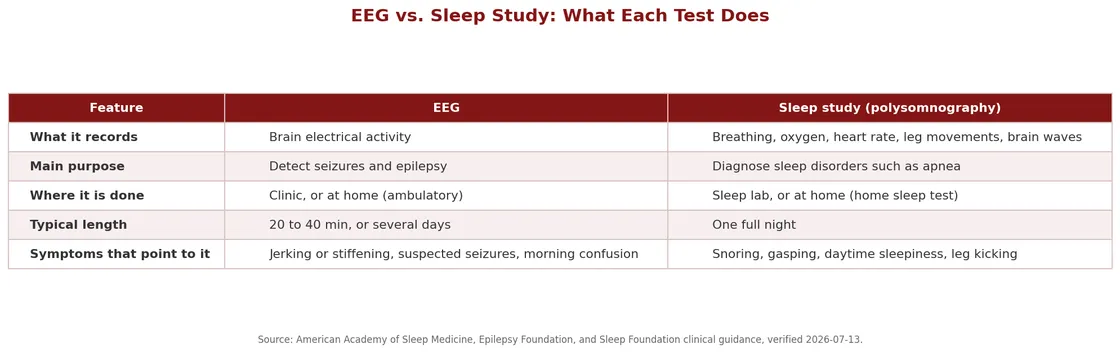
Which Test Do You Need?
When You Need an EEG
An EEG is the right test when the concern is seizure activity. Consider an EEG if a bed partner has seen you stiffen or jerk in a repeated, stereotyped way during sleep, if you wake with a bitten tongue or wet the bed as an adult, or if unexplained morning confusion keeps returning. Our page on nocturnal seizures covers these signs, and our overview of EEG testing in Queens explains how the recording works.
When You Need a Sleep Study
A sleep study is the right test when the concern is how you breathe and move while you sleep. Consider a sleep study if you snore loudly, gasp or choke at night, have been told you stop breathing in your sleep, feel exhausted after a full night in bed, or kick your legs through the night. These point toward sleep apnea or a movement disorder like periodic limb movement disorder, both of which a sleep study can diagnose.
When You Need Both
Some nighttime symptoms sit right at the border between a seizure and a sleep disorder, and there the two tests work together. Vector Sleep Diagnostic Center can pair a sleep study with EEG recording so one team sees both the brain activity and the sleep patterns behind a nighttime event. That combination answers a question neither test can settle alone, and it means you are not sent from one place to another to piece the picture together. Vector Sleep Diagnostic Center has served patients in Rego Park, Queens, since 2005.
Board-certified neurologist and sleep medicine specialist Dr. Dmitriy Kolesnik, MD leads the clinical work at the center; you can read more on the Dr. Kolesnik profile. If you are weighing an at-home test against an in-lab study, our comparison of at-home versus in-lab sleep studies walks through that choice.
Request an Appointment
Send your details below and our Rego Park team will contact you within one business day, or call (718) 830-2800.
Frequently Asked Questions
What is the main difference between an EEG and a sleep study?
An EEG records the electrical activity of your brain and is the primary test for seizures. A sleep study records breathing, oxygen, heart rate, leg movements, and brain waves together to diagnose sleep disorders such as sleep apnea. They answer different questions, and some symptoms need both.
Can one test replace the other?
Usually not. A sleep study is not designed to detect seizures the way an EEG is, and a routine EEG does not measure breathing and oxygen the way a sleep study does. When symptoms could be either a seizure or a sleep disorder, the two tests are run together rather than substituted for each other.
Do I need a referral to get either test?
You can contact Vector Sleep Diagnostic Center directly to ask about EEG testing and sleep studies. Some insurance plans require a referral for coverage, and the clinic’s team can tell you what your specific plan needs when you call.
Which test do I need for nighttime jerking or kicking?
It depends on the pattern. Stereotyped, repeated stiffening or jerking that could be a seizure points toward an EEG, while repeated leg kicks that fragment sleep point toward a sleep study for a movement disorder. A specialist reviews your symptoms and can run both when the picture is mixed.
Can I get both tests in one place in Queens?
Yes. Vector Sleep Diagnostic Center in Rego Park performs both EEG recording and sleep studies, and can combine them when needed, so you are evaluated by one team rather than referred out. You can contact the clinic directly to ask about testing and insurance.