
CBT-I Therapy for Insomnia in New York
Cognitive behavioral therapy for insomnia (CBT-I) is a structured, drug-free treatment for chronic insomnia. At Vector Sleep Diagnostic Center in Rego Park, Queens, we offer CBT-I to patients across New York City who want to fix the causes of poor sleep rather than rely on sleeping pills. Board-certified neurologist and sleep medicine specialist Dr. Dmitriy Kolesnik, MD oversees insomnia care at the center.
For more information about CBT-I or to schedule an appointment, please call us at +1 718-830-2800. Our sleep specialists are dedicated to helping you find the right solutions for your unique needs.
Struggling to fall asleep or stay asleep? Call our Rego Park team to ask whether CBT-I fits your pattern of insomnia.
What is CBT-I?
CBT-I is a structured, evidence-based program that helps you change the thoughts and behaviors that keep you awake. The American Academy of Sleep Medicine gives multicomponent CBT-I a strong recommendation for adults with chronic insomnia disorder, and the American College of Physicians recommends that all adults with chronic insomnia receive CBT-I as the initial treatment. The National Heart, Lung, and Blood Institute describes CBT-I as a 6 to 8 week treatment plan that can be delivered in person, by telephone, or online.
How CBT-I works
CBT-I combines several techniques, tailored to your sleep pattern:
- Stimulus control: rebuilding the link between your bed and sleep, so the bedroom stops being a place of frustration.
- Sleep restriction: matching your time in bed to your actual sleep, then expanding it as sleep consolidates.
- Cognitive restructuring: identifying and reframing the anxious thoughts about sleep that keep you awake.
- Sleep hygiene: adjusting habits, light, caffeine, and routines that affect sleep quality.
- Relaxation training: techniques to lower the physical and mental arousal that blocks sleep.
CBT-I at Vector Sleep Diagnostic Center
Insomnia often has more than one cause. Before or alongside CBT-I, our team can rule out underlying conditions such as sleep apnea or restless legs syndrome with an in-lab sleep study, because untreated apnea can keep insomnia from improving. We then build a CBT-I plan around your specific pattern, whether you struggle to fall asleep, stay asleep, or both. Care is overseen by Dr. Dmitriy Kolesnik, MD and delivered in the context of your full sleep health. Vector Sleep Diagnostic Center has operated in Queens since 2005 and runs 900 to 1,000 sleep studies a year, so the diagnostic side of insomnia care is part of our daily work.
Insomnia Versus Sleep Apnea: Why the Distinction Changes Your Treatment Plan
Insomnia and sleep apnea can look similar from the outside: both leave you exhausted, both disrupt your nights, and both can make daytime concentration difficult. But the treatment paths are different. Insomnia that is not caused by a physical condition often responds well to CBT-I. Sleep apnea involves repeated pauses in breathing during sleep and usually needs a different kind of treatment, sometimes alongside behavioral changes.
Some patients have both. That is why an accurate diagnosis matters before committing to a single treatment path. A sleep study can show whether your sleeplessness is a behavioral pattern, a breathing issue, or a combination, so you and your clinician treat the right problem from day one.
CBT-I versus sleep medication
Sleeping pills can help in the short term, but they act mainly while you take them. CBT-I works on the behaviors and thoughts driving the insomnia. That is why the American College of Physicians puts CBT-I first and reserves medication for a shared decision when CBT-I alone has not worked. Many patients use CBT-I while they reduce sleep aids with their physician.
Who can benefit from CBT-I
CBT-I helps adults with chronic insomnia, including people who:
- Lie awake for a long time before falling asleep
- Wake repeatedly during the night or too early in the morning
- Have relied on sleep medication and want to taper off
- Have insomnia alongside anxiety, chronic pain, or shift work
- Want a lasting, drug-free approach to poor sleep
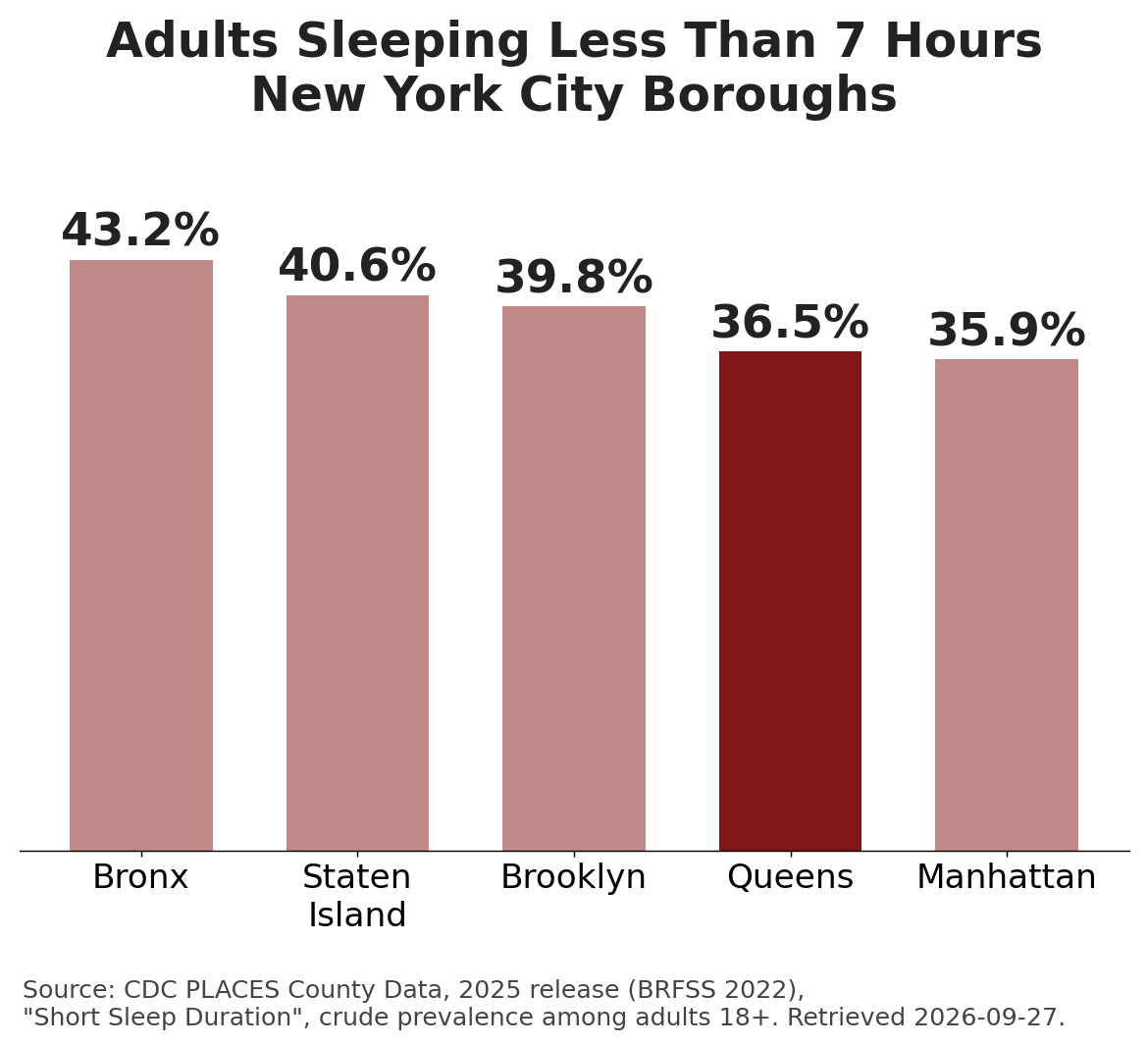
Short sleep is common across the city. Sleeping less than 7 hours is not the same as an insomnia diagnosis, but it shows how many New Yorkers are not getting the sleep adults need.
Related services at Vector Sleep Diagnostic Center
- Insomnia treatment: full evaluation and care for chronic insomnia
- Overnight sleep studies (polysomnography): rule out apnea and other disorders
- Restless legs syndrome treatment: a common contributor to insomnia
Ready to sleep without relying on pills? Call Vector Sleep Diagnostic Center in Rego Park to ask about CBT-I and whether a sleep study should come first.
Frequently asked questions about CBT-I
Is CBT-I better than sleeping pills?
For chronic insomnia in adults, the American College of Physicians recommends CBT-I as the initial treatment and suggests adding medication through shared decision making only when CBT-I alone has not worked. CBT-I targets the habits and thoughts that keep insomnia going, while sleeping pills act mainly while you take them.
How long does CBT-I take to work?
The National Heart, Lung, and Blood Institute describes CBT-I as a 6 to 8 week treatment plan. You practice the techniques between visits, and progress builds over those weeks.
Do I need a sleep study before CBT-I?
Not always, but a sleep study helps when there are signs of another disorder such as sleep apnea or restless legs syndrome. Treating an underlying condition first can make CBT-I more effective.
Can CBT-I help me stop taking sleeping pills?
Many patients use CBT-I while they reduce sleep medication. Any change to a prescribed medication should be planned with your physician, never stopped on your own.
Can insomnia and sleep apnea occur together?
Yes, some patients have both. That is one reason a full evaluation is useful before assuming CBT-I alone will resolve your symptoms; ruling out sleep apnea first can change your treatment plan.
Where do you offer CBT-I in New York?
Our center is in Rego Park, Queens, and we serve patients from across New York City. Call (718) 830-2800 to ask about CBT-I for insomnia.

Medically Reviewed By
Board-Certified Neurologist & Sleep Medicine Specialist • Medical Director, Vector Sleep Diagnostic Center