
Nocturnal seizures are seizures that happen during sleep. They often go unwitnessed and undiagnosed for years because they occur when no one is watching and the person sleeping through them may not remember them. At Vector Sleep Diagnostic Center in Rego Park, Queens, multi-day EEG testing records brain activity across whole nights to catch these events and tell them apart from ordinary sleep movements. This page explains what nocturnal seizures look like, which signs point to a seizure rather than a benign night event, and how testing confirms what is happening.
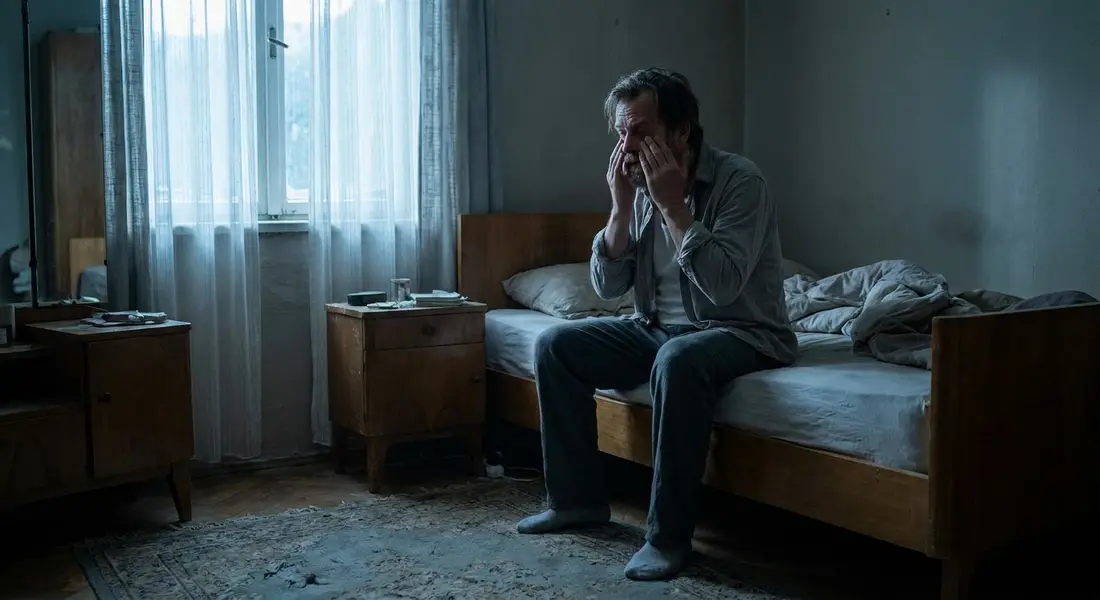
What Are Nocturnal Seizures?
A nocturnal seizure is a burst of abnormal electrical activity in the brain that occurs during sleep. Seizures follow the brain’s sleep and wake cycles, and for some people they cluster almost entirely at night. The Sleep Foundation reports that up to fifteen percent of people with epilepsy have seizures that happen mainly or only during sleep.
Several forms of epilepsy favor sleep. Sleep-related hypermotor epilepsy, once called nocturnal frontal lobe epilepsy, produces sudden movements out of sleep. Frontal lobe epilepsy and certain childhood epilepsies also tend to strike at night. Because the events happen during sleep, the person often has no memory of them, and a bed partner may be the only witness.
Recognizing a Nocturnal Seizure
Signs and Symptoms of a Seizure During Sleep
Nocturnal seizures can look dramatic or subtle. Common signs include stiffening of the body, rhythmic jerking of the arms or legs, sudden movements that repeat the same way each time, unusual vocal sounds, or wetting the bed. Episodes are usually brief and often last less than two minutes, and they can happen several times in one night.
The clues are frequently visible only in the morning. Watch for these signs on waking:
- Confusion or grogginess that lasts longer than a normal wake-up
- A bitten tongue or a sore, bitten cheek
- Unexplained bruises, or waking on the floor
- Loss of bladder control overnight
- Muscle soreness or a headache
- Daytime exhaustion, brain fog, or dizziness after a rough night
Seizure or Benign Night Event?
Not every movement in sleep is a seizure. A single twitch as you drift off is a hypnic jerk, and it is harmless. Sleepwalking and night terrors are parasomnias, which are sleep behaviors rather than seizures. Restless legs syndrome and periodic limb movement disorder cause leg movements that are not seizures either. The difference matters because the treatment for each is completely different, and only testing tells them apart with confidence.
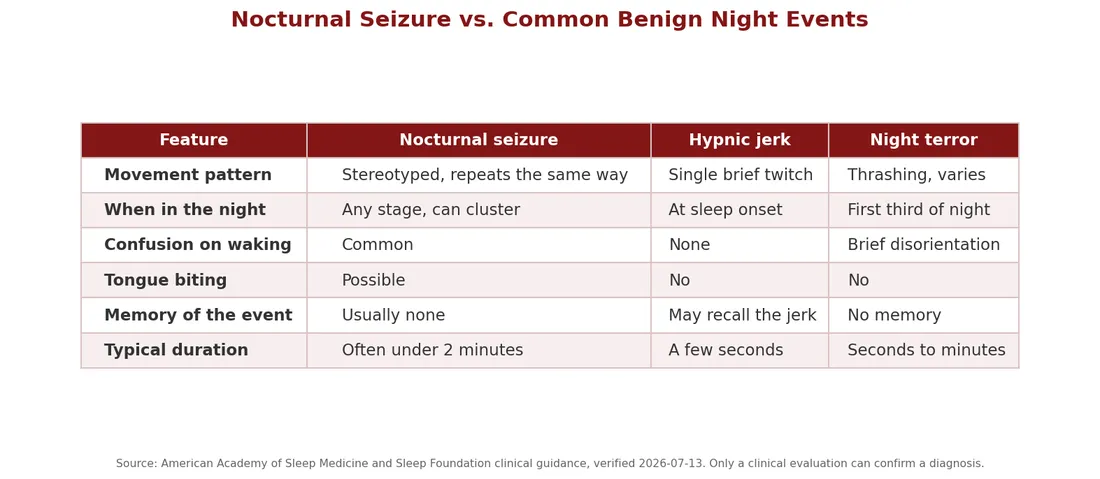
If your symptoms sit at the border between a sleep disorder and a seizure, our overview of EEG testing in Queens explains how a recording sorts one from the other.
How Nocturnal Seizures Are Diagnosed
Diagnosis rests on recording the brain during sleep. A routine EEG in a clinic lasts twenty to forty minutes and often misses events that happen only at night. An ambulatory EEG records for a day or several days at home, so it can capture a seizure that a short test would never see.
Vector Sleep Diagnostic Center pairs EEG recording with a sleep study when the picture is mixed, so a single team can see both the brain activity and the sleep patterns behind a nighttime event. When the recording confirms seizure activity, the team explains what was found and coordinates neurological care. When it points instead to a parasomnia or a movement disorder, the path moves toward the right treatment for that condition.
When to See a Specialist
See a sleep and neurology specialist if a bed partner has witnessed stiffening or jerking during your sleep, if you wake with a bitten tongue or wet the bed as an adult, or if unexplained morning confusion and exhaustion keep returning. Board-certified neurologist and sleep medicine specialist Dr. Dmitriy Kolesnik, MD leads the clinical work at the center; you can read more on the Dr. Kolesnik profile. Vector Sleep Diagnostic Center has served patients in Rego Park, Queens, since 2005. Getting tested replaces guesswork with an answer, and an answer is what makes treatment possible.
Request an Appointment
Send your details below and our Rego Park team will contact you within one business day, or call (718) 830-2800.
Frequently Asked Questions
How do I know if I had a seizure in my sleep?
You often cannot know on your own, which is what makes nocturnal seizures hard to catch. Clues include waking confused, a bitten tongue or cheek, unexplained bruises, wetting the bed, or a partner who has seen you stiffen or jerk. An EEG that records while you sleep is the reliable way to confirm whether a seizure occurred.
Are nocturnal seizures dangerous?
They carry real risks, including injury during the event and, rarely, more serious complications, so they should never be ignored. The reassuring part is that once a seizure disorder is diagnosed, it can be treated. The danger comes mostly from leaving it unrecognized, which is why testing matters.
What is the difference between a nocturnal seizure and a night terror?
A night terror is a parasomnia, a sleep behavior that usually happens early in the night with screaming and fear but no abnormal brain electrical activity. A nocturnal seizure is driven by abnormal electrical activity in the brain and often involves stereotyped movements that repeat the same way. An EEG recording is what distinguishes them.
Can adults develop nocturnal seizures?
Yes. While some sleep-related epilepsies begin in childhood, seizures during sleep can start or continue in adulthood. New nighttime movements, tongue biting, or unexplained morning confusion in an adult are worth evaluating rather than dismissing.
How are nocturnal seizures tested for in Queens?
Vector Sleep Diagnostic Center in Rego Park uses multi-day EEG recording, and pairs it with a sleep study when needed, to capture events that happen only during sleep. You can contact the clinic directly to ask about testing and what your insurance may require.