
Periodic limb movement disorder, or PLMD, causes repeated, involuntary movements of the legs or arms during sleep. The movements happen without the person knowing, so they fragment sleep quietly and often leave someone exhausted for reasons they cannot explain. At Vector Sleep Diagnostic Center in Rego Park, Queens, a sleep study records these movements through the night and measures how much they disturb your rest. This page explains what PLMD is, how it differs from restless legs syndrome, and how testing confirms it.

What Is Periodic Limb Movement Disorder?
PLMD is a sleep movement disorder in which the limbs move repeatedly during sleep in a regular pattern. The movements are called periodic limb movements of sleep, and they usually involve the legs, with a flexing of the ankle, knee, or hip, though the arms can move too. Each movement is brief, and they tend to repeat every twenty to forty seconds in runs that can last minutes or hours.
Because the movements happen during sleep, the person is unaware of them. A bed partner is often the first to notice the kicking or twitching. The movements pull the brain toward lighter sleep or brief awakenings, so the sleep looks long but does not restore energy.
Symptoms of PLMD
The clearest symptoms show up in the daytime, not the night. Consider an evaluation if you notice:
- Waking unrefreshed after a full night in bed
- Daytime fatigue, low energy, or trouble concentrating
- A bed partner reporting repeated kicking or leg jerks while you sleep
- Disturbed or restless sheets in the morning
- Frequent brief awakenings you may not fully remember
These signs overlap with other sleep disorders, which is why testing rather than guesswork gives the answer.
PLMD vs. Restless Legs Syndrome
PLMD and restless legs syndrome are related but not the same, and the difference guides treatment. Restless legs syndrome is an urge to move the legs that you feel while awake, usually in the evening, often with an uncomfortable sensation that eases when you move. PLMD is involuntary movement during sleep that you are not aware of. Many people with restless legs syndrome also have periodic limb movements, but PLMD is diagnosed only when the movements disturb sleep and no other cause explains it.
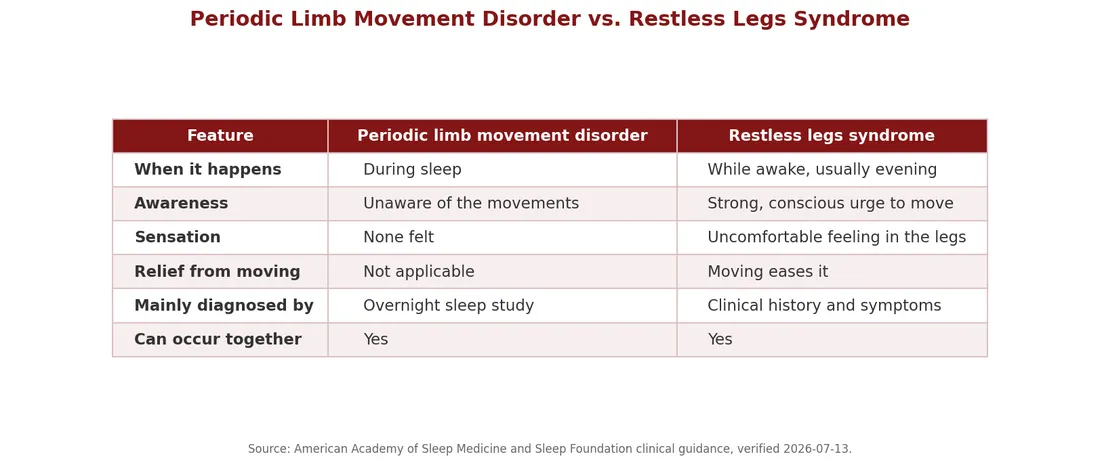
Our page on restless legs syndrome treatment covers the awake-time condition in more detail.
How PLMD Is Diagnosed
PLMD is diagnosed with an overnight sleep study, also called polysomnography. Sensors record leg movements, brain waves, breathing, and heart rate through the night, and a specialist counts the periodic limb movements and measures how often they disturb your sleep. The sleep study also rules out other conditions, such as sleep apnea, that can look similar from the outside.
When nighttime movements could be something other than a movement disorder, Vector Sleep Diagnostic Center can add EEG recording to check for seizure activity. Our overview of EEG testing in Queens explains when that step matters, and our comparison of an EEG versus a sleep study shows which test answers which question.
Causes and Treatment
PLMD is often linked to low iron stores, and it becomes more common with age. It can also appear alongside other sleep and neurological conditions. Because of that, treatment starts with finding the cause. Checking iron levels, reviewing medications that can worsen limb movements, and treating any underlying condition are common first steps, and a specialist may discuss medication when the movements are frequent and keep breaking your sleep.
Board-certified neurologist and sleep medicine specialist Dr. Dmitriy Kolesnik, MD leads the clinical work at the center; you can read more on the Dr. Kolesnik profile. Care continues through follow-up so treatment can be adjusted as your sleep improves.
Frequently Asked Questions
What is the difference between PLMD and restless legs syndrome?
Restless legs syndrome is an urge to move the legs that you feel while awake, usually in the evening, and moving relieves it. PLMD is involuntary limb movement during sleep that you are not aware of. They can occur together, but they are diagnosed and treated differently, and a sleep study helps tell them apart.
How is PLMD diagnosed?
PLMD is diagnosed with an overnight sleep study, or polysomnography. The study records leg movements, brain waves, breathing, and heart rate so a specialist can count the periodic limb movements and see how much they disturb your sleep, while ruling out other causes such as sleep apnea.
Can PLMD cause daytime tiredness?
Yes. The movements pull you into lighter sleep or brief awakenings through the night, so even a full night in bed can leave you unrefreshed. Daytime fatigue and trouble concentrating are among the most common reasons people with PLMD seek help.
Is PLMD related to iron levels?
Often, yes. Low iron stores are a recognized contributor to periodic limb movements, which is why an evaluation frequently includes checking iron. Treating a deficiency, when present, is a common early step alongside reviewing medications that can worsen the movements.
Where can I get tested for PLMD in Queens?
Vector Sleep Diagnostic Center in Rego Park performs overnight sleep studies to diagnose PLMD and can add EEG recording when a nighttime movement needs to be distinguished from a seizure. You can contact the clinic directly to ask about testing and insurance.