What to Bring to Your First Sleep Study Appointment at Vector Sleep
What to Bring to Your First Sleep Study Appointment at Vector Sleep
A first sleep study appointment is a logistical event, not a medical mystery. The simpler you make the check-in, the faster the technologist can place sensors, calibrate the equipment, and let you settle in for the night. This guide lists exactly what to pack for your sleep study at Vector Sleep Diagnostic Center in Queens, NY, plus a short list of what to leave at home so it does not interfere with the recording.
This content was reviewed by Dmitriy Kolesnik, MD, Sleep Medicine Specialist at Vector Sleep Diagnostic Center in Queens, NY.
Identification and Insurance Documents to Bring
Bring a government-issued photo ID and your current medical insurance card. If your sleep study was ordered by a referring physician, bring the referral or order form unless your provider has already faxed it. If your insurance requires prior authorization for polysomnography, bring the authorization number, not just the carrier name.
Patients who pay out of pocket should bring a payment method accepted at check-in. The American Academy of Sleep Medicine recommends arriving with paperwork in hand so the appointment is not delayed by phone calls to insurers [Source: AASM patient resources, accessed 2026-05-13].
Personal Items and Sleepwear
Pack as if for one night in a hotel. The room is private, quiet, and equipped with a bed, bathroom, and changing area. Comfortable two-piece sleepwear is best because electrode wires exit through the neckline. Avoid one-piece pajamas, gowns that fasten at the back, or thick fleece that traps wire leads.
Bring a toothbrush, contact lens case, glasses, any prescription topical creams you use overnight, and a small bag of toiletries. Hair should be clean and free of styling products before arrival because gels, mousses, and oils interfere with electrode adhesion to the scalp.
Medications and Medical Information to Have on Hand
Bring every prescription medication you would take during the night, in the original labeled bottle. Bring an updated medication list that includes drug name, dosage, schedule, and the prescribing physician for each item. Include over-the-counter sleep aids, melatonin, and supplements because some can affect sleep architecture and the technologist will note them on your record.
If you use a CPAP, BiPAP, or oral appliance for sleep apnea and your physician has asked you to bring it, bring the device, the mask, and the power cord. If your study is a CPAP titration, the lab will supply equipment but a familiar mask can be useful.
What NOT to Bring or Use Before Your Sleep Study
Skip caffeine after lunch on the day of your study, including coffee, tea, soda, energy drinks, and chocolate. Skip alcohol for the entire day because alcohol fragments sleep and can mask or worsen breathing events during the recording. Do not apply nail polish to your fingers or toes because the pulse oximeter reads through the nail bed and dark polish blocks the signal [Source: AASM patient preparation guidance, accessed 2026-05-13].
Skip lotions, hairspray, oils, and heavy moisturizers on the scalp, face, neck, and chest. These reduce the contact between skin and the electrodes that record brain waves, eye movements, muscle activity, and heart rhythm. Wash your hair the morning of the study and let it air dry.
Quick Reference Packing Checklist
| Bring | Leave At Home |
|---|---|
| Photo ID and insurance card | Caffeinated beverages |
| Two-piece comfortable sleepwear | Alcohol |
| Prescribed medications in original bottles | Hair gel, mousse, oils |
| Updated medication list | Nail polish on fingers |
| CPAP device if instructed | Heavy lotions on chest or face |
| Toothbrush, glasses, contacts case | Long evening naps the day of study |
What Happens After You Check In
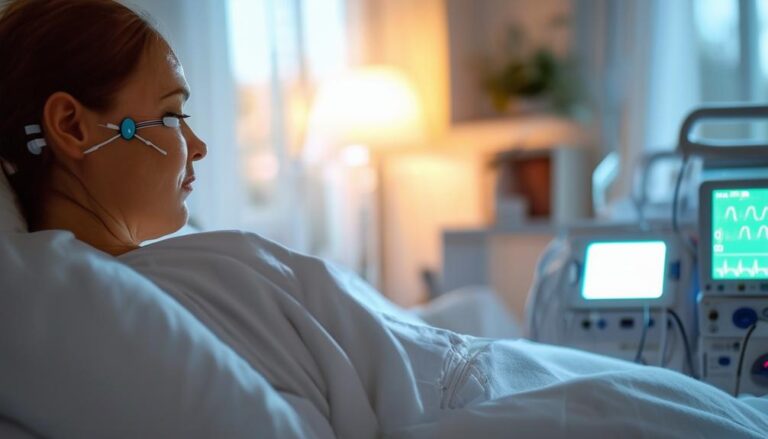
After paperwork, a sleep technologist will show you to a private bedroom and place sensors on your scalp, face, chest, abdomen, and legs. The placement takes 30 to 45 minutes. You can read or use your phone until you are ready to sleep. Lights out is at your normal bedtime when possible. In the morning, the technologist removes the sensors and you go home; you do not wait for results.
If you have specific concerns about claustrophobia, anxiety, or mobility, call the clinic before your appointment so the team can plan for them. Vector Sleep’s concierge sleep evaluation service can also accommodate scheduling or in-home needs when appropriate.
Frequently Asked Questions
What time should I arrive for my sleep study?
Most adult patients are asked to arrive between 8:00 and 9:00 p.m. Check your appointment confirmation for the exact time. Arriving on time matters because sensor placement and equipment calibration take 30 to 45 minutes before lights out.
Can I eat dinner before my sleep study?
Yes. Eat a normal dinner before you arrive. Avoid a heavy or unusually late meal and avoid caffeine after lunch. The lab does not provide dinner.
Can I take my regular sleep medication during the study?
Take prescribed medications on your usual schedule unless your sleep physician told you to hold them. Bring the bottles so the technologist can record dose and timing on the night of your study.
Can I bring my own pillow?
Yes. A familiar pillow can help you fall asleep in an unfamiliar bedroom. The lab also supplies pillows and bedding.
Do I need a ride home in the morning?
Most patients drive themselves home after a routine diagnostic study. If you were given a sedating medication for the study or have a long history of severe sleepiness, arrange a ride. Patients in for a Multiple Sleep Latency Test the same day should plan for transportation.
Ready for answers? Schedule a sleep evaluation at Vector Sleep Diagnostic Center in Queens, NY.