After Your Sleep Study: What Happens Between the Test and Your Results Appointment
After your sleep study, the recording still has to be scored and read by a doctor before anyone can tell you what it shows. NHLBI says your doctor will review your sleep test results and develop a treatment plan for any diagnosed sleep disorder, and the American Academy of Sleep Medicine (AASM) says you will schedule a follow-up appointment to discuss the results. This guide explains each step between the test and that appointment, what the apnea-hypopnea index (AHI) means, and what to ask next. If you are still preparing for your test, start with our night before sleep study checklist.
Vector has served patients since 2005 and runs 900 to 1000 overnight sleep studies a year. Our medical director, Dr. Dmitriy Kolesnik, is board certified in neurology and sleep medicine.
What Your Sleep Study Recorded
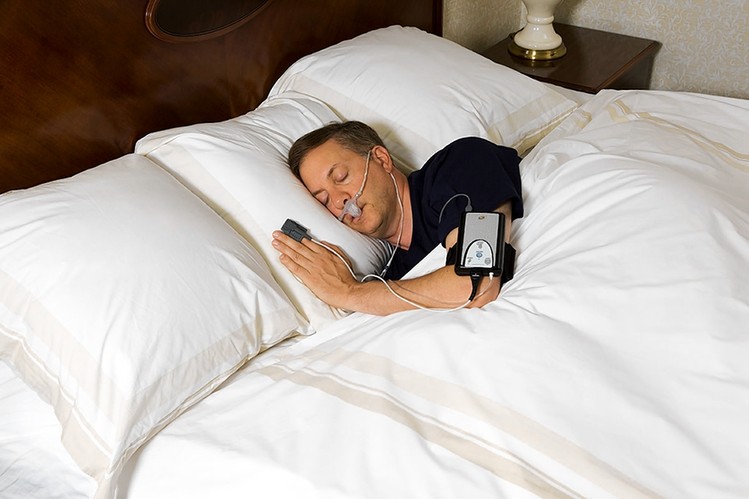
NHLBI describes the most common type of sleep study, also called polysomnography, as a painless test that records brain waves and monitors heart rate, breathing and the oxygen level in your blood during a full night of sleep. At a sleep center, removable sensors are placed on your scalp, face, eyelids, chest, limbs and a finger, and they record brain waves, heart rate, breathing effort and rate, oxygen levels and muscle movements before, during and after sleep. Our page on sleep studies at Vector explains what happens during the night itself.
Step 1: Scoring the Recording
Raw sensor data has to be turned into counts of events before it means anything. The AASM publishes the AASM Scoring Manual, and the clinical practice guideline for diagnostic testing says the scoring of respiratory events is defined in that manual. Two terms matter most. An apnea is a pause in breathing and a hypopnea is a partial reduction in airflow. The guideline notes that the Scoring Manual recommends counting a hypopnea when the airflow change comes with a 3 percent oxygen desaturation or an arousal from sleep, and allows an alternative definition that requires a 4 percent desaturation.
Scoring produces numbers, not a diagnosis. Those numbers go to a physician for the next step.
Step 2: Physician Review and Diagnosis
NHLBI says your doctor will review your sleep test results and develop a treatment plan for any diagnosed sleep disorder. The AASM guideline calls for follow-up under the supervision of a board-certified sleep medicine physician, so that study findings and recommendations are relayed appropriately and the right expertise is available to prescribe and manage therapy. At Vector, Dr. Kolesnik is board certified in neurology and sleep medicine.
How long each step takes varies by clinic, by the type of test and by your insurer. The sources behind this guide do not give a standard number of days, so we do not promise one here. Ask the clinic that ran your study when to expect your results appointment, and call if you have not heard back.
What the AHI Number Means
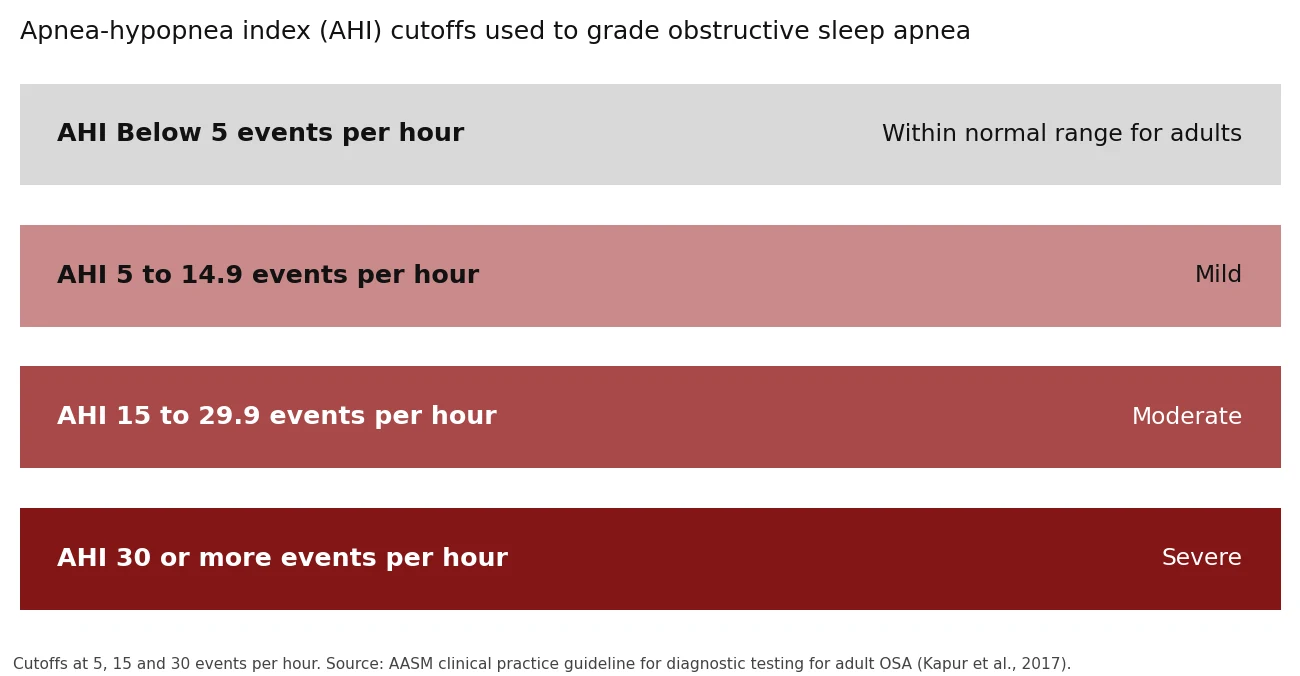
The AHI is the number of apneas and hypopneas per hour of sleep. The AASM clinical practice guideline for diagnostic testing for adult obstructive sleep apnea evaluates tests at AHI cutoffs of 5, 15 and 30 events per hour. It also reports that the third edition of the International Classification of Sleep Disorders defines obstructive sleep apnea as an obstructive respiratory disturbance index of 5 or more events per hour with typical symptoms such as unrefreshing sleep, daytime sleepiness, fatigue or insomnia, awakening with a gasping or choking sensation, loud snoring or witnessed apneas, or an obstructive index of 15 or more events per hour even without symptoms.
| AHI (events per hour) | Range |
|---|---|
| Below 5 | Below the first cutoff used in the guideline |
| 5 to 14.9 | Mild range |
| 15 to 29.9 | Moderate range |
| 30 or more | Severe range |
The AHI alone does not decide treatment. Your doctor reads it together with your symptoms, oxygen levels and medical history, and the same AHI can mean different things for different people.
What Happens at the Results Appointment
The AASM says that if you are diagnosed with sleep apnea, your medical provider will discuss your treatment options with you. Per the AASM patient page on obstructive sleep apnea, your plan may include any combination of these treatments:
- CPAP: a machine that uses a steady stream of air to keep your airway open. The AASM calls it the frontline treatment for sleep apnea, recommended for most patients.
- Oral appliance therapy: fitted by a dentist trained in dental sleep medicine, recommended for patients with mild to moderate apnea who cannot tolerate CPAP or prefer to try it.
- Positional therapy, weight management and lifestyle changes: for example, avoiding alcohol, which relaxes the throat muscles.
- Surgery or upper airway stimulation: options if CPAP or an oral appliance does not work for you.
Bring a list of questions and, if you can, a partner or family member who has seen your symptoms. Our overview of sleep apnea care explains how Vector approaches treatment.
If Your Result Is Negative or Inconclusive
A negative result does not always end the workup. The AASM guideline recommends an in-lab polysomnogram when a single home sleep apnea test is negative, inconclusive or technically inadequate, and suggests that when an initial polysomnogram is negative and suspicion for sleep apnea remains, a second polysomnogram be considered. NHLBI describes other tests for ongoing daytime tiredness: a Multiple Sleep Latency Test, which measures how quickly you fall asleep during a series of daytime naps, and a maintenance of wakefulness test, which measures your ability to stay awake and alert. If insomnia is the main problem, see our page on insomnia solutions. If your test was missed or needs to move, read how to reschedule a sleep study.
Why the Same Person Can Get Different Numbers
The AASM guideline lists night to night variability and inconsistent definitions of hypopnea as reasons results can differ between tests, and notes that depending on the definition used, the AHI may be considerably different in a given individual. That is one reason your doctor interprets the whole study and your symptoms, not one number.
Quick Reference: Bring and Ask
| Item | Why it matters |
|---|---|
| Your symptoms and how long you have had them | The diagnostic criteria for obstructive sleep apnea include typical symptoms, so your history matters. |
| Your AHI and any oxygen findings | Ask which hypopnea definition was used if you compare results between tests. |
| Questions about treatment options | The AASM lists CPAP, oral appliances, positional therapy, weight management, lifestyle changes and surgery. |
| A partner or family member who has seen your symptoms | They can describe snoring, pauses and gasping you may not remember. |
| Your next test, if the result is negative | Ask whether a repeat polysomnogram or a Multiple Sleep Latency Test makes sense. |
Get in Touch With Our Team
Questions about your results or your next step? Vector Sleep Diagnostic Center in Rego Park, Queens, can help. Email vectorsleep@gmail.com or call (718) 830-2800.
Frequently Asked Questions About Sleep Study Results
How long does it take to get sleep study results?
The sources used for this guide do not give a standard number of days, so this page does not either. The American Academy of Sleep Medicine (AASM) says that after your sleep study or home sleep apnea test you will schedule a follow-up appointment to discuss the results. Ask the clinic that ran your study when to expect that visit, and call them if you have not heard back.
What is a normal AHI score?
The AHI counts apneas and hypopneas per hour of sleep. The AASM clinical practice guideline for diagnostic testing uses cutoffs of 5, 15 and 30 events per hour as severity thresholds, and the third edition of the International Classification of Sleep Disorders defines obstructive sleep apnea as an obstructive respiratory disturbance index of 5 or more events per hour with typical symptoms, or 15 or more events per hour even without symptoms. Your doctor reads the number together with your symptoms and history.
Will I get a CPAP machine at my results appointment?
That depends on your result and your doctor’s plan. The AASM says that if you are diagnosed with sleep apnea, your medical provider will discuss your treatment options with you, and that CPAP is the frontline treatment for sleep apnea and is recommended for most patients. Other options the AASM lists include an oral appliance, positional therapy, weight management, lifestyle changes and surgery.
What if my sleep study result is negative but I still feel tired?
A negative result does not always end the workup. The AASM guideline suggests that when an initial polysomnogram is negative and clinical suspicion for obstructive sleep apnea remains, a second polysomnogram can be considered. NHLBI also describes a Multiple Sleep Latency Test, a daytime nap test that helps diagnose conditions such as narcolepsy that cause extreme daytime tiredness. Bring up your symptoms at the results appointment.
What happens if my home sleep apnea test is negative or inconclusive?
The AASM guideline recommends that if a single home sleep apnea test is negative, inconclusive or technically inadequate, an in-lab polysomnogram be performed for the diagnosis of obstructive sleep apnea.
Can two sleep studies give different AHI numbers?
Yes. The AASM guideline notes night to night variability and different definitions of a hypopnea, and says that depending on which definition is used the AHI may be considerably different in the same person. The AASM Scoring Manual recommends counting a hypopnea when airflow drops with a 3 percent oxygen desaturation or an arousal, and allows an alternative definition that requires a 4 percent desaturation.
Sources
- NHLBI, Sleep Studies, what a sleep study records, other sleep tests, doctor review of results
- American Academy of Sleep Medicine, Sleep Education: Obstructive Sleep Apnea, diagnosis, follow-up appointment and treatment options
- Clinical practice guideline for diagnostic testing for adult obstructive sleep apnea (AASM, Journal of Clinical Sleep Medicine, 2017), AHI cutoffs, ICSD-3 definition, negative and inconclusive tests
- AASM Scoring Manual, the reference for scoring sleep studies